2027: From Fear to Stability, Kogi Central Is Not Guessing, It Is Remembering Yahaya Bello

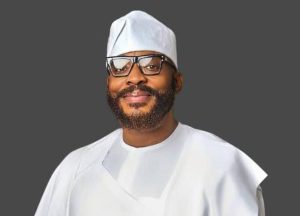
On December 29, 2025, former Governor of Kogi State, His Excellency Yahaya Bello, CON, after deep reflection and wide consultations, accepted the overwhelming and unanimous call of his people to contest the Kogi Central Senatorial election in 2027.
For keen observers of Kogi State politics; an arena historically shaped by ethnicity, numbers, and entrenched political patterns, this call was neither accidental nor surprising. It was, rather, the culmination of years of leadership, sacrifice, and tangible impact.
For a man widely referred to as the “Ebira Political Messiah,” the moment marked the beginning of a return to service and a continuation of a journey defined by courage and disruption of political orthodoxy.
From the creation of Kogi State in 1991 until 2015, political power at the level of governor remained the exclusive preserve of the majority Igala ethnic group.
Democratically, no other ethnic bloc had occupied the seat. At best, the Ebira and Okun people were accommodated as deputy governors, reinforcing a political order many had come to accept as immutable.
Electoral mathematics appeared to justify this arrangement: Kogi East, with nine local government areas, enjoyed numerical dominance over Kogi West’s seven and Kogi Central’s five.
In a democracy where numbers often trump sentiment, it was widely believed that power would permanently rotate within Kogi East. Before 2015, the idea that an Ebira or Okun son could emerge as governor was largely dismissed as fantasy.
It was against this backdrop that Yahaya Bello, then young, largely unknown, and politically underestimated, stepped into the governorship race in 2015. He entered the contest audaciously, armed more with conviction than with political pedigree.
Detractors dismissed him as a political neophyte, some derisively referring to him as a “Youth Corps member” or a greenhorn unfit for the rough terrain of Kogi politics. Yet beneath the mockery was a man with a clear vision, uncommon resilience, and a deep understanding of the state’s political history.
Bello refused to confine his ambition to Kogi Central. Instead, he mobilised young men and women across the three senatorial districts, harmonising youthful energy with the wisdom of elders whose experience helped shape his strategy.
At the APC governorship primary, Bello squared off against formidable opponents, including the late Prince Abubakar Audu, the state’s first executive governor, who was seeking the office for the 3rd time. Against expectations, Bello emerged as the dark horse of the contest, polling 703 votes against Audu’s 1,109.
Though narrowly defeated, he displayed an act of political maturity rarely seen: while other aspirants exited the venue in protest or silence, Bello stayed until the final declaration, walked up to Audu, embraced him, conceded defeat, and pledged loyalty to the party.
That singular act of humility, commitment, and discipline would later prove providential, as events unfolded to propel him, by divine orchestration, to the Government House in Lokoja.
Before Bello’s assumption of office, Kogi State was more often associated with insecurity, maladministration, infrastructural decay, and social stagnation than with progress. Most alarming was the security situation, particularly in Kogi Central.
Dark valleys and caves, in and around Okene, had become hideouts for Boko Haram and ISWAP elements. Attacks on military checkpoints were frequent. Armed robbery, political thuggery, and violent cultism flourished.
Even more devastating was the prolonged clannish crisis that ravaged Ebiraland. Traditional and religious leadership selections were conducted at gunpoint. From 2007 to 2014, many communities were razed, businesses destroyed, and lives lost.
Ebiraland haemorrhaged its productive population as professionals, traders, and families relocated to safer cities, leaving behind only the aged and the traumatised.
One of Yahaya Bello’s most defining achievements as governor was the decisive restoration of peace and security, particularly in Kogi Central. Through firm political will and close collaboration with security agencies, criminal enclaves were dismantled. Terrorist hideouts were identified and neutralised. Kidnappers, armed robbers, and political thugs were confronted and prosecuted within the ambit of the law.
Fundamentalist actors who thrived on division were isolated, and the culture of impunity was dismantled. For the first time in decades, Ebiraland experienced sustained peace. Security returned, not merely as the absence of violence, but as the foundation for renewed economic and social life.
The transformation was unmistakable. Okene of 2025 bore little resemblance to Okene of 2014. Businesses returned home, social life revived, infrastructure expanded, and markets flourished.
For the Ebira people, peace became the most cherished dividend of governance. The sense of safety restored dignity, confidence, and hope to a land long accustomed to fear.
It was therefore only natural that the people of Kogi Central, reflecting on this legacy, resolved to call Yahaya Bello to serve them at the national level. Their appeal was spontaneous, organic, and unanimous; spreading like wildfire among Ebira sons and daughters at home and in the diaspora.
To many, it was the only meaningful way to express gratitude: for ending decades of insecurity, dismantling political apartheid, and not only emerging as governor for eight years but also producing a worthy successor from the same district to sustain the legacy.
This collective will crystallised on December 29, 2025, during a Christmas homage paid by Bello to the Ohinoyi of Ebiraland, His Royal Majesty Ahmed Tijani Anaje, Sa’aki, at his palace in Okene.
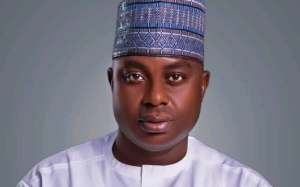
Present at the palace was the incumbent governor, Ahmed Usman Ododo, who seized the moment to formally present the people’s request. In an atmosphere of respect and symbolism, Governor Ododo appealed to the Ohinoyi to prevail on his predecessor to accept the senatorial call, recalling how Bello had once presented him, Ododo, to the same palace as governorship candidate in 2023.
The paramount ruler acknowledged the legitimacy of the appeal, reminisced on the dark days of insecurity before 2015, and described the call as a just reward for service rendered. In response to the combined appeal of the people, the traditional institution, and his successor, Yahaya Bello accepted the call in affirmation.
The movement had earlier been initiated by the State Accountant-General, Dr. Habibat Tijani Onumoko popularly known as “Mama Alert” and was subsequently endorsed by political, religious, socio-cultural groups and key stakeholders across Kogi Central.
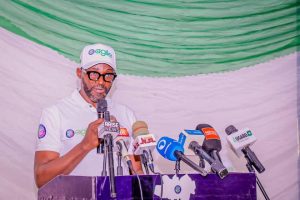
Between 23rd and 31st December 2025, Okene became a national spectacle during the DAM Foundation Basketball Championship, attracting global music stars, entrepreneurs, and socialites. Their testimonies of peace, unity, and security reinforced the narrative of transformation.
Davido described Kogi people as united and Okene as peaceful and secure. Odumodublvck called the city a centre of greatness, while Cubana Chief Priest openly praised the leadership that made Okene safe enough for extended stays and public festivities.
In the end, Yahaya Bello could not refuse a call so deeply rooted in collective memory and lived experience. To the people, it was not merely about politics; it was about representation by a man who had walked with them through chaos and delivered peace.
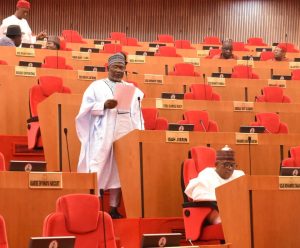
They believe that at the National Assembly, he will bring courage, experience, security consciousness, and an unparalleled commitment to justice and equity; ensuring that their voices resonate beyond Kogi, into the heart of national decision-making.
ONOGWU Muhammed – Lawyer, Public Policy Analyst, Multimedia Journalist, & Public Relations Expert
05/01/2026
About Post Author