Kogi Central and The Question of Representation: Yahaya Bello or Natasha Akpoti-Uduaghan Beyond 2027?

By Habib Haruna, MA, MBA, PhD,
As Nigeria gradually turns its gaze toward the 2027 general elections, political conversations across the country are beginning to take shape. In Kogi State, particularly within the Kogi Central Senatorial District, one question has increasingly dominated public discourse: who should represent the district in the National Assembly beyond 2027, Senator Natasha AkpotiUduaghan or former Governor Yahaya Adoza Bello?
Opinions on this matter remain sharply divided. While political commentators, analysts, and observers from outside Kogi Central have offered various predictions, it is important to note that such external assessments may not fully capture the political consciousness, historical experiences, and value system of the Ebira people, who constitute the core of the senatorial district. Indeed, the ultimate choice of Kogi Central voters in 2027 is likely to differ significantly from the expectations of those unfamiliar with the district’s unique political trajectory.
Fundamentally, what Senator Natasha Akpoti-Uduaghan and former Governor Yahaya Bello represent to the Nigerian public at large is not necessarily identical to what they symbolize to the Ebira people. Consequently, the criteria by which both figures are evaluated within Kogi Central differ markedly from national narratives.
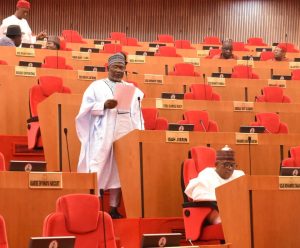
Senator Natasha Akpoti-Uduaghan represents, in many respects, a new and commendable standard of legislative representation. Her tenure in the Senate has been widely acknowledged for its depth, visibility, and effectiveness. She has demonstrated a clear understanding of the
legislative process, contributing meaningfully to debates on national issues and advancing lawmaking with clarity and purpose. Beyond the chambers of the National Assembly, her constituency-focused interventions particularly in the areas of empowerment, human capital development, and social advocacy—have redefined expectations of what senatorial
representation should entail.
It is not an exaggeration to assert that Senator Akpoti-Uduaghan stands as one of the most impactful representatives Kogi State has produced in recent history. In terms of legislative engagement, constituency outreach, and national relevance, her performance places her not only at the forefront within the state but also among the more distinguished senators in contemporary Nigeria.
Yet, any serious analysis of Kogi Central politics must equally contend with the enduring legacy of Yahaya Adoza Bello. To many Ebira people, Bello is not merely a former governor; he is widely regarded as a political pathfinder who disrupted a deeply entrenched system of exclusion.
At a time when marginalization appeared institutionalized and political power seemed permanently inaccessible to certain groups, Bello dared to challenge the status quo. His emergence marked a watershed moment in Kogi State politics, ushering in a more inclusive political order and redefining participation across senatorial and ethnic lines.
Yahaya Bello’s ascendancy is often interpreted by the Ebira people as a triumph of social justice and political emancipation. His leadership symbolized the breaking of long-standing barriers and
the dismantling of an arrangement in which political offices—particularly senatorial seats—were effectively determined by elite interests rather than popular will. In this sense, Bello occupies a
unique place in the collective political memory of Kogi Central as a leader who transformed marginalization into opportunity.
It is within this broader historical context that Senator Akpoti-Uduaghan’s rise must also be situated. Her opportunity to contest and ultimately occupy the senatorial seat was made possible
by the political realignment and inclusiveness that followed Bello’s intervention in Kogi State politics. While her success is undoubtedly a product of personal competence, resilience, and
vision, it also reflects a political environment reshaped by Bello’s earlier defiance of exclusionary norms.
For this reason, many within Ebira land view the relationship between Bello and Akpoti Uduaghan not as one of rivalry but of sequence and complementarity. Yahaya Bello is perceived as the catalyst who opened the political space, while Natasha Akpoti-Uduaghan is seen as a worthy beneficiary who maximized that opportunity in service of her people. She is widely regarded as a beloved daughter of Ebira land who has justified the confidence placed in her through exemplary performance.
However, the contemporary debate has increasingly attempted to frame both figures as historically equivalent, a framing that demands closer analytical scrutiny. Political leadership, when assessed within a historical and structural framework, is not defined by eloquence, personal grace, or episodic popularity, but by the scale of vision and the depth of transformation
a leader sets in motion. In political history, leaders who effect generational change are often described as giants—not because of physical stature or rhetorical brilliance, but because of the magnitude of their dreams and the enduring legacies those dreams produce.
Measured against this standard, Yahaya Bello occupies the category of a political giant within Ebira political consciousness. His significance derives less from verbal persuasion than from a daring vision that fundamentally altered the political trajectory of Kogi Central and Kogi State at
large. At a time when the prospect of an Ebira son emerging as governor was widely dismissed as politically impossible, Bello’s decision to contest represented an act of radical political imagination. What many initially perceived as political recklessness or near insanity later
revealed itself as a decisive moment of structural rupture.
Bello did not merely win an election; he dismantled a long-standing architecture of
marginalization and replaced it with a political order in which access to power was no longer the preserve of a narrow elite. His leadership expanded the political imagination of the people, converting aspiration from a privilege into a right. In this sense, he functioned as both the builder and enabler of a liberated political platform—a fertile political landscape upon which new actors could emerge and thrive.
Senator Akpoti-Uduaghan’s political success must therefore be understood as expressive rather than foundational. She stands as one of the most capable and discerning beneficiaries of the
political openness that followed Bello’s intervention. Her achievements, while substantial and worthy of recognition, were made possible by the prior dismantling of barriers that once
rendered such ambitions unattainable. Her contributions reflect the effective utilization of opportunity rather than the creation of opportunity itself.
This distinction is particularly salient among the Ebira people, who possess a lived memory of political exclusion and understand the weight of the yoke that once constrained their collective
aspirations. Consequently, while Senator Akpoti-Uduaghan will undoubtedly be remembered in history as a kind and glowing light—an accomplished and distinguished daughter of Ebira
land—her impact is not perceived as occupying the same historical plane as that of Yahaya Bello.
The comparison between Bello and Akpoti-Uduaghan, when framed as a contest of equivalence, thus becomes analytically inappropriate. Leadership is ultimately measured by the weight and
magnitude of impact—by the structural changes initiated and the horizons expanded—not by performance alone. Bello’s willingness to confront overwhelming odds, his emergence through a combination of political resolve and what many interpret as divine providence, and his success in
transforming marginalization into possibility have collectively immortalized him within Ebira political memory.
Whereas Senator Akpoti-Uduaghan represents the fruits of a liberated political order, Yahaya Bello represents its genesis. He symbolizes the moment when the impossible became attainable, when political ambition was democratized, and when an entire people were invited to dream without restraint. In this respect, Bello is remembered not merely as a former governor but as a symbol of political emancipation and generational transformation. In summary, the debate over who should represent Kogi Central beyond 2027 is not a simple
contest of competence, visibility, or contemporary performance. It is a reflection of deeper historical experiences, collective memory, and political identity. While Senator Natasha AkpotiUduaghan exemplifies effective and modern legislative representation, Yahaya Bello embodies a foundational political shift whose impact continues to define the aspirations and self-perception
of the Ebira people. Should Bello choose to contest the senatorial seat, support for him would likely be interpreted not merely as political preference but as an acknowledgment of a legacy that
redefined the place of Kogi Central within the political architecture of Kogi State.
Ultimately, the decision rests with the people of Kogi Central, whose choice will be shaped less by external commentary and more by their lived political history, collective memory, and enduring aspirations for the future.
- Habib Haruna, MA, MBA, PhD,
About Post Author