One Senator. Three Regions. One State
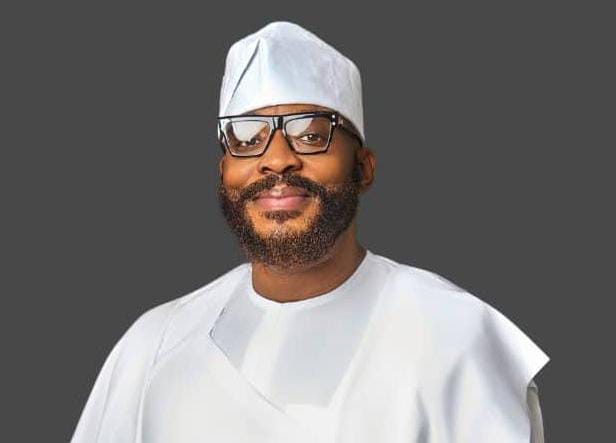
By Mahmoud Bala Alfa, Ph.D.
Kogi State is a place of many voices, defined by its different languages, cultures, and histories that have grown side by side over time. From the East to the West, and across the Central axis, this diversity should be a source of strength. It should create balance, build understanding, and give the state a shared sense of direction that reflects the richness of its people. But, this has not fully been our experience.
Over the years, what should have brought us together has taken a more complex path. Not always in ways that are loud or confrontational, but in something quieter like in how we see ourselves, how we relate to one another, and how we understand representation. The differences that should have strengthened our shared voice have instead created a subtle separation, felt more in attitude than in appearance.
At the same time, it is important to acknowledge that Kogi State has not stood still. Under the leadership of His Excellency, Yahaya Bello, CON, deliberate efforts were made to reshape the political and social landscape of the state in ways that emphasised inclusion, balance, and a shared identity beyond regional lines. That direction has found continuity in the administration of His Excellency, Alhaji Ahmed Usman Ododo, where governance continues to manifest a commitment to unity and collective progress. These efforts have helped to lay a foundation, one that points clearly towards a more connected and forward-looking Kogi State.
Yet, even with this progress, an important question remains: how do we deepen and sustain this vision across all arms of governance?
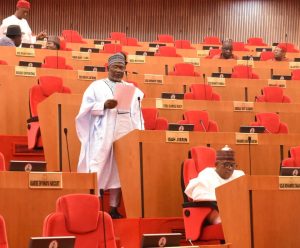
Legislative representation, in many ways, has remained narrow. It is not always consistently seen as a duty to the whole, but often as a duty to a part. Each region turns inward, seeking to protect its space and secure its interests. This instinct is understandable. Every community wants to be heard. Every people desire inclusion. No one wishes to be left behind. But, in securing our separate spaces, we may have unintentionally limited the full strength of what we can achieve together.
Kogi East speaks for Kogi East. Kogi West speaks for Kogi West. Kogi Central stands firmly within its own space. What we have, therefore, is not an absence of representation, but a pattern of isolated representation. And this raises a fundamental question:
Who speaks for Kogi State as a whole?
We must all agree that at the national level, influence is not built on scattered efforts. It is built on unity and clarity of direction. Where these are absent, even sincere efforts struggle to produce lasting impact. Work is done, voices are heard, but without alignment, such efforts rarely carry the weight required to determine broader outcomes. This is how a state can remain active, yet not fully effective.
In such circumstances, opportunities do not always disappear, they simply pass by because there is no coordinated force strong enough to secure them. And this is not what the sacrifices of building the “New Kogi State” since 2016 represents.
A major part of the challenge lies in how we have come to understand representation. For too long, it has been viewed primarily as protection; a means to defend interests, secure benefits, and ensure inclusion. In that sense, representation becomes something to guard, rather than something to grow. It becomes about limits instead of possibilities. And when this thinking prevails, it inevitably constrains what leadership can achieve, because meaningful progress is rarely built in isolation.
To me, what is required now is not a complete departure from what has been done, but a deliberate strengthening of it.
If the progress made at the executive level has shown the possibility of unity, then the next step is to ensure that this same clarity, alignment, and sense of shared purpose is fully reflected in the legislative space. Representation must go beyond protection. It must evolve into something that not only defends interests, but connects them intentionally and consistently.
This does not mean ignoring local priorities, nor does it require any group to diminish its voice. Rather, it calls for leadership that understands both the whole and its parts; leadership that listens across divides, identifies common ground, and creates pathways where interests meet instead of compete. Leadership that sees diversity not as a challenge, but as an opportunity for collective advancement.
When interests are aligned, influence becomes stronger. And when influence is stronger, progress becomes more attainable.
This is where the idea of a bridge becomes essential; not as something entirely new, but as something that must now be strengthened and extended. A bridge that connects regions, aligns priorities, and ensures that the gains already made are not only preserved, but expanded.
My journey has not been confined to a single space. Over the years, I have had the opportunity to work across systems and continents, gaining insight into how institutions function, how economies are built, and how diverse interests can be aligned to produce meaningful outcomes. These experiences have shaped how I approach challenges; not in isolation, but in connection.
In practical terms, this means I look beyond immediate boundaries. I understand that the growth of one part is linked to the stability of another. I recognise that development is not driven by isolated efforts, but by systems that function best when they are aligned. For me, leadership must be grounded in structure, coherence, and long-term impact; not short-term gains.
This is the approach to representation that I believe our state requires at this stage of its progress.
In a state like Kogi, where diversity presents both opportunity and complexity, this perspective offers a path away from fragmented politics and towards a more unified direction that builds on the foundation already laid, while strengthening it where it matters most. Because ultimately, the future of our state will not be determined by how strongly each region speaks in isolation, but by how effectively we are brought together to speak as one.
Unity, therefore, is not merely an aspiration. It is a strategy that must be deliberately sustained. And that work must be carried across every level of leadership.
Kogi does not need competing voices.
It needs connected ones.
I offer myself in that spirit, as someone committed to strengthening the bridge that has already been built, and to working with all our regions to ensure that Kogi State speaks with a more coherent, inclusive, and effective voice at the national level.
About Post Author