Why Some Nations Prosper While Others Only Change Governments
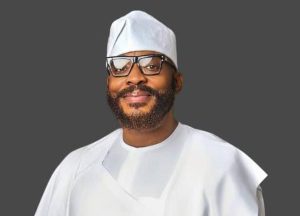
By Mahmoud Bala Alfa, Ph.D.
Every election changes a government, but very few of them change an economy. This is one of the most important lessons in political economy, but it is often forgotten in public debate. Elections attract headlines, governments make appointments afterwards, and political parties celebrate victory or explain defeat. But once the excitement is over, the real question remains unanswered: Has anything changed that will make the economy more productive?
This question explains why some nations become prosperous while others remain trapped in the cycle of political competition without achieving lasting economic progress.
For many years, people believed that natural resources determined the wealth of nations, but experience has shown otherwise. Countries with few natural resources have become some of the richest in the world, while many resource-rich nations continue to struggle with unemployment, poverty and slow economic growth. The difference is rarely the resources beneath the ground. More often, it is the ideas that guide those who govern above the ground. And, this is where political economy becomes important.
Political economy begins with a simple truth that, every economic outcome is shaped by political choices. A government’s decision to protect property rights affects investment. Its tax policies influence business expansion. Its education policies affect the quality of future workers. Its infrastructure decisions determine how easily goods move from farms and factories to markets. Even the confidence investors have in an economy is influenced by the quality of public institutions.
In other words, politics creates incentives, and incentives define economic behaviour.
Businesses invest when they believe tomorrow will be more predictable than today. Farmers produce more when roads, storage facilities and markets reduce waste. Young people invest in education when they believe hard work will be rewarded. Investors commit capital where rules are stable and contracts are respected. Productivity does not grow by accident. It grows because political decisions encourage people to produce, invest, innovate and create value.
This is why I believe Nigeria’s political conversation needs a new standard of measurement.
For too long, we have measured politics by elections won, appointments secured and offices occupied. These are political outcomes, but they are not necessarily development outcomes. I propose a different measure, and I call it “The Prosperity Test.”
Every major political decision should answer these simple question:
Will this decision increase Nigeria’s productive capacity over the next five, ten or twenty years?
Will it encourage investment? Will it create jobs? Will it improve learning? Will it strengthen institutions? Will it help businesses grow? Will it increase agricultural and industrial production?
If the answer to these questions is largely no, then we should honestly ask whether the decision serves the country’s long-term interest. Because the purpose of politics is not simply to manage power, rather it is to organise society in a way that allows more people to become productive.
This is what I describe as the “Politics of Production.” And a nation focused on it does not judge success by the number of political offices it creates. It judges success by the number of economic opportunities it creates. Its governments compete to attract investment, its states compete to improve education, its institutions compete to deliver better public services, and its policies reward enterprise instead of uncertainty.
History offers many examples. Countries such as Singapore, Vietnam and Botswana followed different political paths, but they shared one important characteristic. Their governments consistently made choices that encouraged production, investment and institutional stability over long periods. They understood that sustainable prosperity is built gradually through predictable policies and capable institutions, not through short-term political victories alone.
Nigeria possesses many of the ingredients required for similar progress. We have a youthful population, vast agricultural land, entrepreneurial talent and abundant natural resources. These advantages should be engines of national prosperity, but advantages alone do not produce development.
Resources create possibilities, institutions turn possibilities into productivity, and productivity creates prosperity. That is why institutions matter so much. Strong institutions reduce uncertainty. When uncertainty falls, investment becomes easier. As investment increases, businesses expand. Expanding businesses employ more people, produce more goods and pay more taxes. Those taxes allow governments to invest further in infrastructure, education and healthcare, creating another cycle of growth.
Prosperity is therefore the result of many good political decisions reinforcing one another over time. And this understanding should also change the way we judge leadership.
A successful leader should not be remembered simply for winning elections. Did more businesses open under them? Did more young people find meaningful work? Did farmers become more productive? Did exports increase? Did institutions become stronger? And, did citizens gain greater confidence in the future? These are the questions political economy encourages us to ask because they measure whether politics is creating lasting economic value.
Nigeria has an abundance of politics. What we need is more productive politics; politics that expands opportunity, rewards enterprise and strengthens institutions. Our national conversation should therefore move beyond personalities and focus more on productivity. Governments should compete not only for political support but also for economic results. And citizens should judge leaders not only by promises made but by opportunities created.
If politics becomes more productive, the economy will become more productive. If the economy becomes more productive, living standards will improve. And if living standards improve, politics itself will become healthier because hope grows where opportunity exists.
The future of Nigeria will not be determined only by who occupies public offices, but whether those in public office understand that political power is valuable only when it expands economic opportunity.
That is the central lesson of political economy.
And perhaps it is the conversation Nigeria needs most today.
About Post Author