Kogi East Infrastructure: Ododo Fast-Tracks Immediate Take-Off of Ibaji, Bassa Roads, Nine Schools

By Johnson Musa, PhD
The Kogi State Government’s decision to fast-track the commencement of two strategic economic road corridors and nine comprehensive secondary school projects across Kogi East marks a significant milestone in regional infrastructure development and responsive governance.
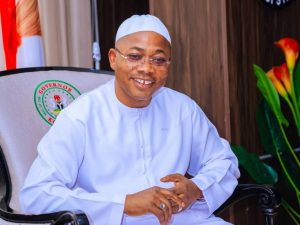
Under the leadership of Governor Ahmed Usman Ododo, the relevant administrative approvals have been granted for the immediate commencement of the 37-kilometre Idah–Onyedega Road in Ibaji and the 13-kilometre Odenyi–Oguma–Sheria Road in Bassa, alongside a comprehensive education infrastructure programme covering all nine Local Government Areas of Kogi East under the World Bank-assisted Adolescent Girls Initiative for Learning and Empowerment (AGILE) programme.
The decision to authorise the immediate mobilisation of these projects represents a significant transition from planning and advocacy to tangible execution. It also demonstrates the administration’s willingness to respond promptly to critical infrastructure needs identified by stakeholders.
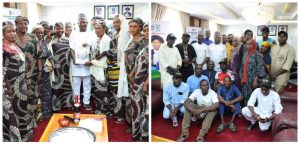
Reacting to the development, the Kogi East APC Legacy Group warmly commended Governor Ododo, describing the swift approvals as a clear demonstration of responsive leadership, stakeholder engagement and commitment to equitable development.
According to the group, the prompt executive action, coming barely weeks after it submitted a comprehensive memorandum outlining the critical infrastructure needs of Kogi East, demonstrates that the administration is prepared to listen to stakeholders and translate constructive engagement into concrete development.
The group further noted that the development validates the importance of structured consultation, credible baseline information and mutual political trust in advancing regional aspirations.
ODODO’S VISION OF SHARED PROSPERITY
The development also reflects the broader philosophy articulated by Governor Ododo during his statewide broadcast on August 27, 2026, commemorating the 35th anniversary of the creation of Kogi State.
In that address, the Governor presented a vision of Kogi State in which the diversity of its people becomes a foundation for economic growth, unity and shared prosperity.
He emphasised the relationship between fairness, confidence, trust, peace and investment, arguing that equitable development strengthens citizens’ sense of belonging, reduces political tensions, encourages private investment and enhances the legitimacy of public institutions.
The Governor also proposed the establishment of the Kogi Shared Prosperity and Transformation Council to support the implementation of the 32-year Kogi State Development Plan (2024–2056).
Against this backdrop, the immediate approval of the Ibaji and Bassa road projects demonstrates how the principle of geographic equity can be translated into practical interventions that directly affect communities and local economies.
FROM STAKEHOLDER MEMORANDUM TO PROJECT EXECUTION
The approved projects correspond directly with some of the priority demands contained in the memorandum submitted by the Kogi East APC Legacy Group.
The group comprises experienced political stakeholders whose political heritage spans several decades and various party transitions, including the National Republican Convention (NRC), UNPP, APP, ANPP, Action Congress of Nigeria (ACN) and, ultimately, the All Progressives Congress (APC).
As political veterans who witnessed and contributed to some of the infrastructural achievements associated with the administration of the late Prince Abubakar Audu, the group approached the present administration with a development-oriented blueprint aimed at strengthening Kogi East’s integration into the state’s broader economic architecture.
Rather than adopting an adversarial approach, the stakeholders presented specific infrastructure priorities capable of generating economic opportunities, improving social services and strengthening the productive capacity of the region.
IBAJI ROAD: OPENING AN AGRICULTURAL CORRIDOR
The economic importance of the 37-kilometre Idah–Onyedega Road cannot be overstated.
Ibaji is predominantly agrarian, with substantial agricultural potential and recognised crude oil deposits. However, poor road infrastructure, flooding and inadequate connectivity have historically constrained economic activity in the area.
The construction of the Idah–Onyedega Road is therefore expected to provide a more reliable transport corridor linking farming communities with Idah and important commercial and transportation networks along the River Niger.
An improved road network will facilitate the movement of agricultural produce, reduce transportation costs, minimise post-harvest losses and improve access to markets.
It will also enhance the movement of essential services and strengthen the operational mobility of security agencies within the affected communities.
BASSA ROAD: STRENGTHENING AGRICULTURAL TRADE
Similarly, the 13-kilometre Odenyi–Oguma–Sheria Road in Bassa Local Government Area is a strategically important agricultural corridor.
For communities along the route, improved connectivity will help reduce transportation difficulties and make it easier for farmers and traders to move goods between rural production areas and commercial centres.
The project is expected to reduce vehicle operating costs, improve farm-to-market access and increase the economic value of agricultural production.
Beyond its economic benefits, the road will also improve accessibility for government services and enhance security coverage across the affected communities.
NINE SECONDARY SCHOOL PROJECTS ACROSS KOGI EAST
Equally significant is the education infrastructure programme being implemented under the AGILE framework, which provides for interventions across all nine Local Government Areas of Kogi East.
The approved projects include the upgrading of the UBE Junior Secondary School at Enjema in Ankpa to full senior secondary status and the establishment of the Government Science Secondary School at Oguma in Bassa.
In Dekina, the UBE Junior Secondary School at Efakwu Egume is to be expanded, while the Government Secondary School at Onyedega in Ibaji will receive comprehensive modernisation works.
The programme also provides for institutional upgrades at Idah Secondary Commercial College and targeted expansion of the UBE Junior Secondary School at Odolu in Igalamela-Odolu.
In Ofu, the UBE Junior Secondary School at Agojeju will be elevated to senior secondary status.
The rollout is completed with interventions at Ukoh Community Secondary School in Olamaboro and the Government Science Secondary School at Ogodu in Omala.
The distribution of these projects across the nine Local Government Areas is particularly significant because it ensures that educational investment is not concentrated in a few urban centres.
By expanding senior secondary, science and commercial education capacity across the district, the intervention has the potential to narrow the rural-urban education gap and strengthen grassroots human capital development.
A BROADER DEVELOPMENT AGENDA
The Kogi East APC Legacy Group has described the approved road and school projects as the beginning of a broader regional development agenda.
The group expressed optimism that other critical demands contained in its memorandum will receive similar executive consideration.
Among the priorities identified are the establishment of a National Electric Transmission Substation in Kogi East to address the region’s longstanding industrial and domestic power challenges; the systematic revitalisation and modernisation of historic General Hospitals across the nine Local Government headquarters; expansion of rural water supply schemes; strengthened security deployment; and the development of transparent frameworks for the responsible exploitation of the region’s mineral resources.
Particular attention, according to the stakeholders, should be given to the development of the Ankpa coal reserves and Ibaji oil resources, with the objective of ensuring that natural resources become catalysts for employment, industrialisation and sustainable economic development.
RESPONSIVE GOVERNANCE AND THE PROMISE OF SHARED PROSPERITY
Infrastructure projects of this magnitude require substantial financial resources, careful planning, institutional coordination and sustained political commitment.
The rapid movement of the Ibaji and Bassa road projects, alongside the nine secondary school interventions, demonstrates what can be achieved when executive leadership is combined with constructive stakeholder engagement and public support.
The Kogi East APC Legacy Group therefore commends Governor Ahmed Usman Ododo for responding positively and swiftly to the infrastructure priorities presented by stakeholders.
The group also reaffirmed its loyalty to President Bola Ahmed Tinubu and the All Progressives Congress (APC) as the country approaches future political milestones.
Ultimately, the developments in Ibaji, Bassa and the nine Local Government Areas demonstrate an important principle of democratic governance: when leadership listens, responds and acts with determination, public confidence is strengthened, regional aspirations gain momentum, and the promise of shared prosperity moves from rhetoric to reality.
Dr. Johnson Musa, PhD, is a Development Analyst.
About Post Author