Zinariyar Minna: When Honour Finds A Woman of Substance
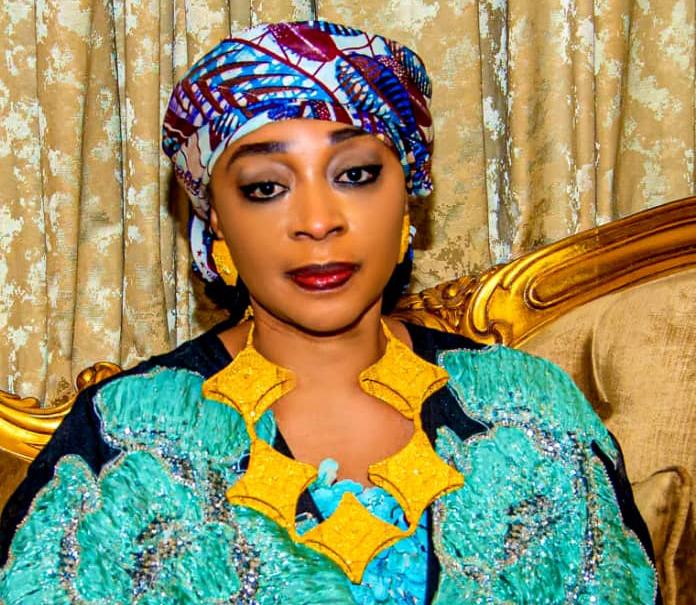
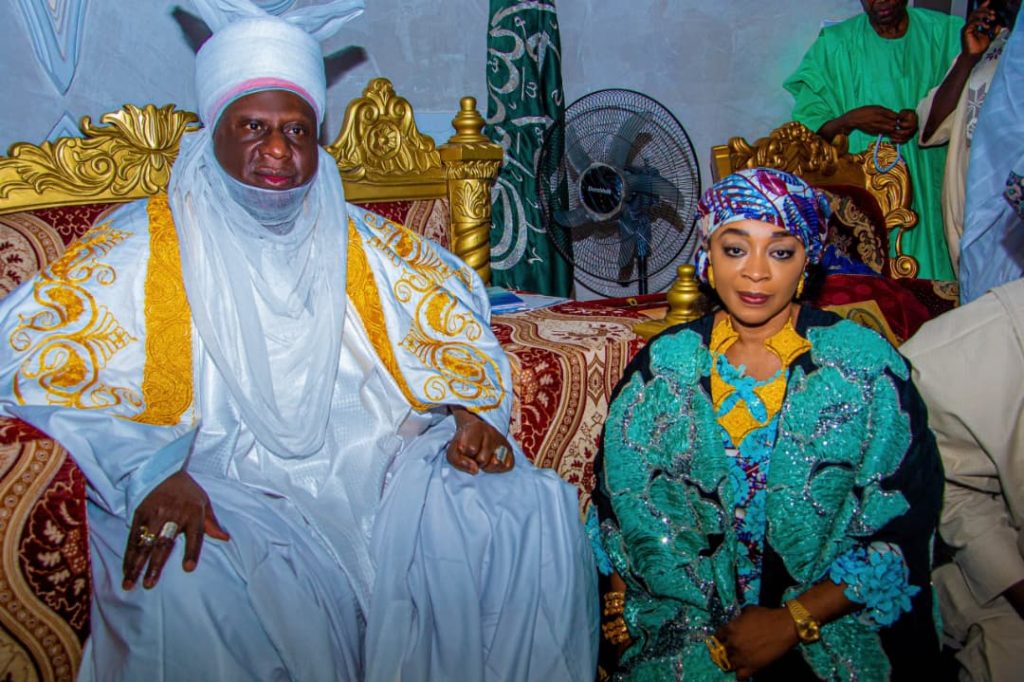
There are moments in public life when ceremony rises above spectacle and becomes something far more enduring—a cultural statement, a moral endorsement, a recognition of quiet but far-reaching impact. Such was the atmosphere in Minna on April 11, 2026, when the ancient Emirate Council, under the revered leadership of His Royal Highness, Alhaji Dr. Umar Farooq Bahago, CON, conferred the historic title of Zinariyar Minna on Hajiya Sa’adatu Sani Musa.
It was not merely another chieftaincy event. It was history, unfolding in real time.
From the early hours of the day, anticipation hung thick in the air as a distinguished motorcade departed Abuja, charting a symbolic journey through Suleja, Lambata and Paiko—towns that have, in one way or another, felt the touch of her philanthropy. It was a procession marked not by flamboyance, but by a quiet dignity that mirrored the woman at its centre. By the time the entourage arrived in Minna, the “Power State” capital had transformed into a theatre of celebration, with a sea of admirers gathering to welcome a woman many already regard as a pillar of compassion.
The Emirate Council’s decision to bestow the title of Zinariyar Minna—literally, the “Golden Woman of Minna”—on Hajiya Sa’adatu Sani Musa carries both symbolic and historical weight. It is, significantly, the first time such an honour has been conferred on a woman in the Emirate’s history. In making that choice, the Council aligned her legacy with an illustrious lineage of formidable women in Northern Nigeria’s socio-political evolution—figures such as Queen Amina of Zazzau, the legendary warrior-queen; Hajiya Gambo Sawaba, the irrepressible activist; and Hajiya Laila Dogonyaro, the consummate philanthropist. These were women whose influence transcended their time. In Sa’adatu Sani Musa, the Emirate appears to have found a contemporary echo of that same enduring relevance.
If the ceremony provided the grandeur, the citation delivered the substance.
Read by Alhaji Abdullahi O. Haruna, the citation painted a portrait of a woman whose life has been defined not by noise, but by measurable impact. Born in Dundee, Scotland, and armed with a strong academic foundation—including a Master’s degree in Leadership from the University of Abuja—she has built a formidable presence in the corporate space as Chairman of Sasan Oil and Gas. Through affiliated ventures spanning real estate, retail and energy, she has not only created wealth but also expanded opportunities for countless Nigerians.
Yet, it is outside the boardroom that her influence resonates most deeply.
Through the Future Pathway Foundation, established in 2003, Hajiya Sa’adatu Sani Musa has quietly engineered interventions that have altered the trajectory of lives across Niger State, Nasarawa and the Federal Capital Territory. From skills acquisition programmes for rural women to scholarships, healthcare interventions and direct financial support, her philanthropy has assumed a structural dimension—one that empowers rather than merely assists. It is this consistent investment in human capital, particularly among the underserved, that appears to have sealed her place in the Emirate’s honour roll.
In his remarks, His Royal Highness, Alhaji Dr. Umar Farooq Bahago, CON, was said to have been particularly struck by her humility and cultural rootedness—qualities often scarce in an era of performative generosity. He spoke of a woman whose home remains open, whose giving is instinctive, and whose sense of responsibility extends beyond immediate circles to the broader community.
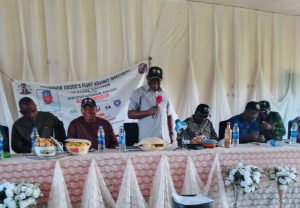
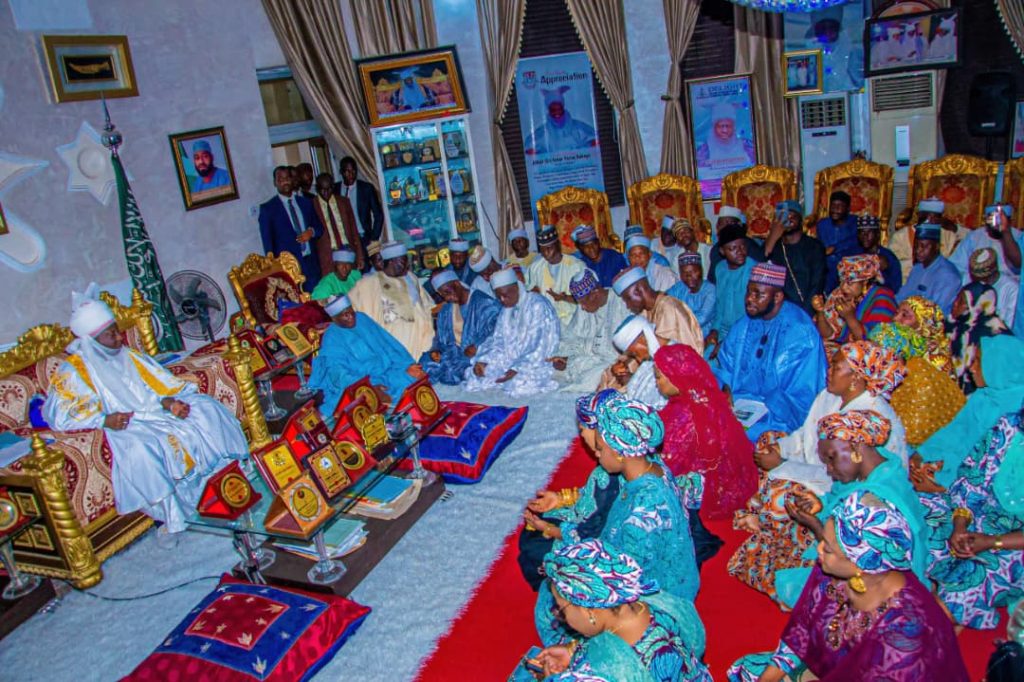
The event itself was rich in pageantry—traditional drumming, regal processions, and the unmistakable choreography of Northern aristocratic culture. Yet, it retained a human core. Guests, including dignitaries, associates and beneficiaries, took turns to share personal testimonies of her interventions. Among them was her sister, Honourable Minister Hajiya Imaan Sulaiman-Ibrahim, who joined others in paying glowing tribute to a life lived in service.
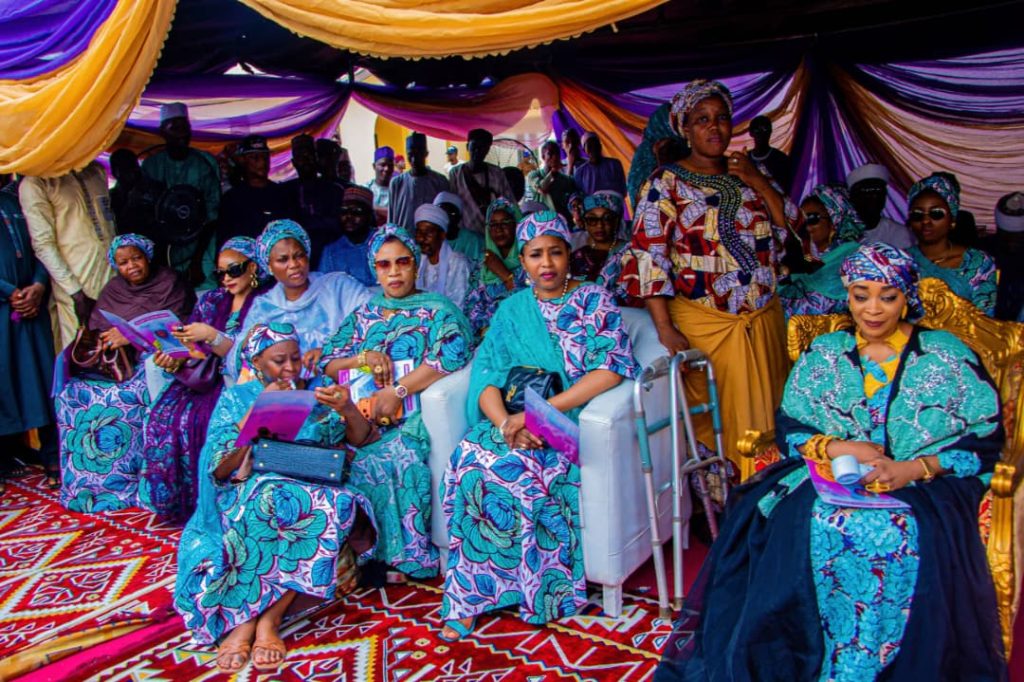
True to form, the celebrant ensured that the ceremony did not end as mere symbolism. In a gesture that has become almost customary, she extended support to attendees—offsetting medical bills, distributing food items, and providing financial assistance. It was, in many ways, a continuation of the very work for which she was being honoured.
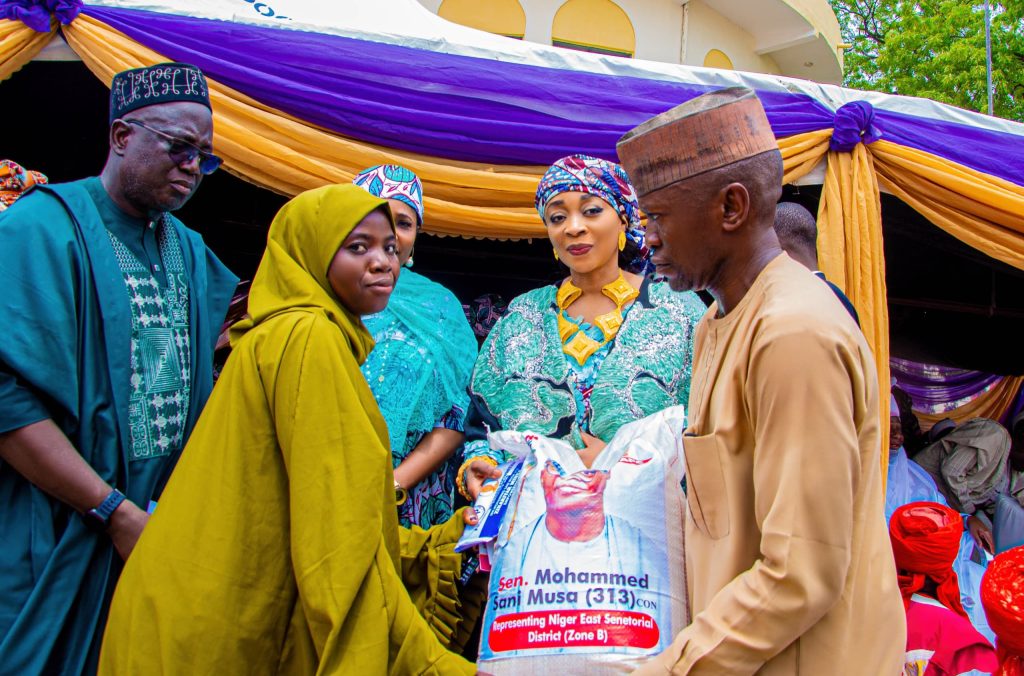
But perhaps the most defining moment of the day came not during the conferment, nor the citation, but at the very end—when the formalities had ebbed and the atmosphere softened into reflection.
In a deeply symbolic act steeped in cultural nuance, Hajiya Sa’adatu Sani Musa presented the honour she had just received to her husband, Distinguished Senator Mohammed Sani Musa, CON, who represents Niger East Senatorial District. It was a gesture that spoke volumes—of loyalty, of partnership, and of a value system that places shared purpose above individual acclaim. The senator, visibly moved, responded with heartfelt encomium, celebrating not just her achievements, but her role as a wife, mother and pillar of their family.
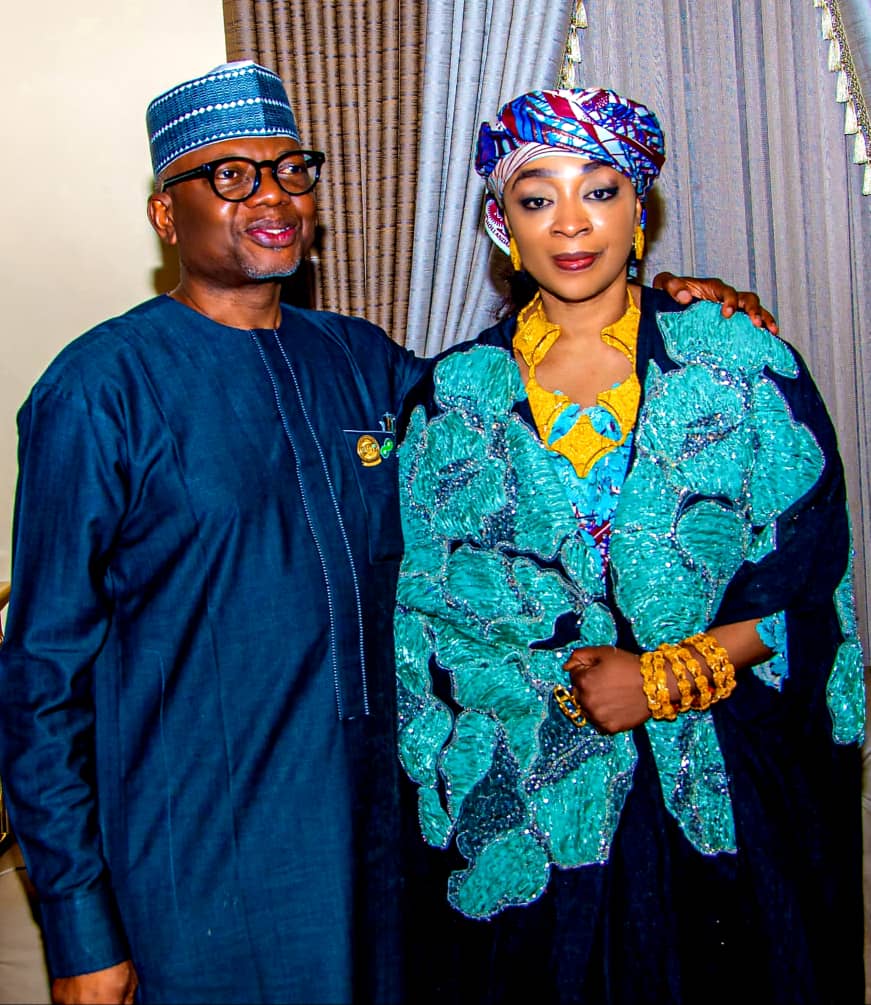
In that singular moment, the ceremony found its emotional climax.
For all its colour and ceremony, the conferment of Zinariyar Minna ultimately distilled into something profoundly simple: a recognition that impact—when sustained, sincere and people-centred—will always find its voice. And in Hajiya Sa’adatu Sani Musa, Minna has not merely crowned a woman; it has affirmed a philosophy of living—one that measures success not by accumulation, but by contribution.
In a society often enamoured with fleeting influence, her story offers a refreshing counterpoint.
Here, indeed, is a woman whose legacy is not just being written—but is already being lived.
About Post Author