Beyond Limits: From Anambra to Osun, Amupitan’s Road to a Credible 2027 Election?
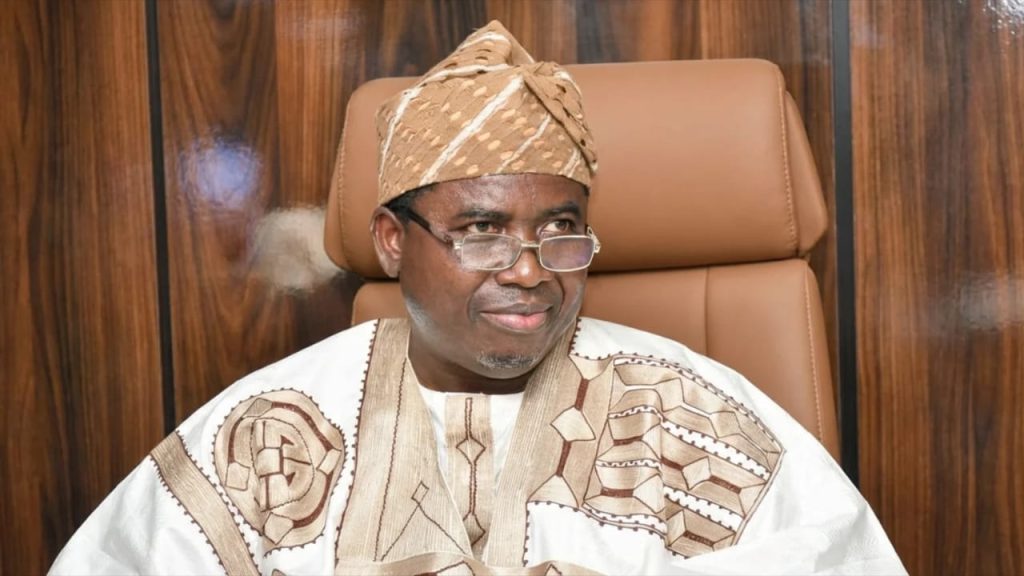
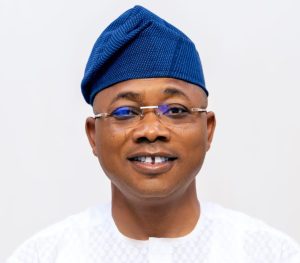
INEC Chairman Prof. Joash Ojo Amupitan faces a major test as Nigeria prepares for the 2027 general elections.
For Nigeria, elections have never been merely about putting ballot papers into boxes. They have always been a test of the nation’s democratic character, a moment when citizens decide whether their votes will truly determine who governs them.
That is why the credibility of the electoral umpire matters so much.
Since independence, Nigeria has passed through different generations of Electoral Management Bodies, from the Electoral Commission of the Federation (ECF) and the Federal Electoral Commission (FEDECO) to the National Electoral Commission (NEC), the National Electoral Commission of Nigeria (NECON) and, since 1999, the Independent National Electoral Commission (INEC). Each was established with essentially the same democratic responsibility: to organise elections in which citizens can freely choose their leaders and trust that their votes will count.
Yet, for decades, the gap between that constitutional ideal and electoral reality has been painfully wide.
Nigeria’s electoral history is littered with disputed results, violence, logistical failures, vote-buying, voter intimidation and allegations of manipulation. The 2007 general election remains one of the darkest chapters in that history, while the disputed 2023 presidential election further deepened public anxiety over the reliability of electoral technology and result transmission.
There have, however, been moments when the country has demonstrated that credible elections are not beyond its reach. The 1993 presidential election, conducted under Prof. Humphrey Nwosu, remains a reference point in Nigeria’s electoral history. The 2015 election under Prof. Attahiru Jega also demonstrated that power could change hands through the ballot box, with an incumbent president conceding defeat to the opposition candidate.
The lesson is simple: Nigeria does not lack the capacity to conduct credible elections. What it has often lacked is the institutional consistency, political restraint and public confidence required to make electoral integrity the rule rather than the exception.
That is where the recent performance of INEC becomes significant.
The emergence of Prof. Joash Ojo Amupitan, SAN, as Chairman of INEC in 2025 has created a new moment of expectation. A professor of law and an authority in Evidence Law, Amupitan entered the commission at a time when public confidence in electoral institutions needed rebuilding.
His challenge was therefore bigger than conducting another election.
He had to demonstrate that INEC could learn from its failures, strengthen its systems and make the electoral process more predictable, transparent and credible.
The first major test came in Anambra. The Commission approached the November 2025 governorship election with visible emphasis on preparation, logistics, technology and stakeholder engagement. Ahead of the election, INEC deployed more than 24,000 personnel and thousands of vehicles and boats, while 6,879 BVAS devices were tested and configured for the exercise. The Commission also established mechanisms for live monitoring of field operations from its Situation Room in Abuja.
The result was significant. The Nigeria Civil Society Situation Room reported that the collation process was quick and largely free from the kinds of irregularities that had historically characterised result management. More importantly, it recorded that 97 per cent of polling-unit results had been uploaded to IReV within five hours of the close of polls.
That was not perfection. No serious assessment of an election should pretend that it was. But it represented measurable institutional progress. For an electoral commission whose credibility had been battered by years of public suspicion, the ability to make polling-unit results available quickly for public scrutiny was not a small achievement.
Then came Ekiti. By June 2026, INEC appeared to have taken the lessons from Anambra into another politically important off-cycle election. Ahead of the poll, the Commission declared operational, technological and logistical readiness, while Prof. Amupitan personally engaged stakeholders and presented the Commission’s preparedness to the public.
The voter register had also undergone verification and cleaning, with 1,059,360 registered voters cleared for the election.
When voting ended, the result was declared in the early hours of the following morning. INEC declared Biodun Oyebanji the winner with 319,224 votes.
Then came Osun. If Anambra tested INEC’s preparedness and Ekiti tested its consistency, Osun presented an even more demanding examination.
The political environment was intense. The stakes were high. Political competition was fierce. Yet the election proceeded with a level of administrative discipline that would have been difficult to imagine in some of Nigeria’s earlier electoral cycles.
Results began appearing on IReV after voting ended, allowing political parties, candidates, observers and members of the public to scrutinise polling-unit results electronically. By about 2am the following morning, results from 3,612 of the state’s 3,763 polling units had been uploaded; approximately 96 per cent.
Read Also: 2026 Osun State Governorship Election Results
Independent observation provided another important layer of validation.
The European Union-supported Election Observation Hub described the Osun poll as generally peaceful, orderly and inclusive during its preliminary assessment, having deployed hundreds of observers across the state.
More significantly, Yiaga Africa’s observation indicated that the results announced by INEC were consistent with its statistical estimates. That matters because electoral credibility is strongest when an election result can survive independent scrutiny rather than merely the declaration of the umpire.
But honesty requires acknowledging the imperfections. Osun was not a flawless election. There were reports of vote-buying, isolated violence, and low voter turnout. Those shortcomings remain serious concerns that INEC must confront before 2027.
Yet, ironically, acknowledging those weaknesses makes the larger story more credible.
The emerging story under Amupitan is not that Nigeria has suddenly discovered a perfect electoral system. It is that the electoral commission appears to be moving in the right direction. The difference is visible in the management of logistics, the speed of result transmission, the use of technology, stakeholder engagement and the willingness to expose results to public scrutiny. That is the foundation upon which the 2027 election must be built.
The presidential and National Assembly elections are scheduled for January 16, 2027, followed by the governorship and State House of Assembly elections on February 6. Unlike off-cycle governorship elections, the general election will involve the entire federation, millions of voters, thousands of candidates and an extraordinary level of political pressure.
That is where Amupitan’s real test begins. The question is no longer whether he can conduct a respectable off-cycle election in one state. Nigerians will want to know whether the discipline demonstrated in Anambra, Ekiti and Osun can be scaled nationally.
Can the same level of preparedness be reproduced across the country?
Can result transmission remain prompt when the stakes are infinitely higher?
Can INEC resist political pressure from powerful interests?
Can logistical failures be reduced to the barest minimum?
Can technology work reliably in remote communities as well as major cities?
And, perhaps most importantly, can the Commission convince Nigerians that the ballot remains more powerful than money, influence and political connections?
These are the questions that will define Amupitan’s legacy.
There is, however, reason for cautious optimism. The recent elections suggest that INEC possesses both the institutional capacity and the technological tools required to make significant progress. What remains is the political will, administrative discipline and courage to apply those tools consistently, without fear or favour.
For Amupitan, the phrase “Beyond Limits” should therefore mean more than a slogan. It should mean taking the lessons of Anambra, the operational experience of Ekiti and the transparency demonstrated in Osun and transforming them into a national electoral standard.
It should mean arriving before problems become crises. It should mean transmitting results without unnecessary delay. It should mean confronting vote-buying rather than merely lamenting it. It should mean protecting election officials from political interference and ensuring that every eligible voter, regardless of location or social status, enjoys the same opportunity to vote.
Above all, it should mean building an electoral institution whose credibility does not depend on who wins.
That is the ultimate test.
INEC cannot determine Nigeria’s political winners. It should not. Its responsibility is more fundamental: to ensure that Nigerians, and Nigerians alone, determine those winners through a process that is transparent, credible and defensible.
Amupitan therefore enters 2027 with something previous INEC chairmen often struggled to secure; an opportunity to build on measurable recent progress and turn cautious public optimism into lasting institutional confidence.
The journey from Anambra to Ekiti and Osun has shown what is possible.
The journey to 2027 will determine whether that progress was merely a series of promising performances or the beginning of a genuine transformation in Nigeria’s electoral history.
For once, the country has reason to watch the electoral umpire not only with suspicion, but also with expectation.
And perhaps that is where the real opportunity lies.
Can Amupitan go beyond limits? The answer will not be found in speeches, promises or political endorsements. It will be found at the polling units in January and February 2027 when Nigerians cast their votes and wait to see whether the institution entrusted with protecting those votes will, at last, rise fully to the moment.
ONOGWU Muhammed, LLB, BL, LLM (IN View), MIAD, ANIPR
24th August, 2026
About Post Author