The Billions Beneath the Atlantic: Bonga South-West and Ojulari’s Deepwater Renaissance at NNPC
For years, Nigeria sat on a paradox beneath the Atlantic. Its deep offshore held enormous oil and gas reserves, international oil companies possessed the technology and expertise to develop them, and the country desperately needed the investment, production and revenue that such projects could generate. Yet, somehow, the money remained on the sidelines.
Projects that should have become engines of growth were trapped in prolonged negotiations, fiscal uncertainty, commercial disagreements and regulatory bottlenecks. Some of the country’s most promising offshore assets became monuments to what Nigeria had in abundance but struggled to convert into wealth.
That story may finally be changing. The most compelling evidence is not another government promise or another projection of what Nigeria’s petroleum industry could become. It is the movement of serious capital towards projects that had spent years waiting for the right commercial conditions.
President Bola Ahmed Tinubu’s signing of the Deep Offshore Oil and Gas Projects Incentives (Tax Remission) Order, 2026, has fundamentally altered the conversation around deepwater investment. The framework is designed to provide a more predictable and competitive fiscal environment capable of unlocking more than US$50 billion in potential new investment in Nigeria’s deep offshore.
For an industry where investment decisions can involve billions of dollars and extend over decades, certainty is not a technical detail. It is the foundation upon which investment decisions are made.
And almost immediately, the policy signal was followed by a commercial development of enormous significance.
On 24 August 2026, NNPC Limited and the contractor parties to Oil Mining Lease 118 executed addenda to the Production Sharing Contract and Dispute Settlement Agreement for the long-delayed Bonga South-West/Aparo project. The agreement brings one of Nigeria’s most important deepwater developments significantly closer to Final Investment Decision and opens the door to an estimated US$15 billion to US$21 billion investment over the life of the project.
At peak production, Bonga South-West/Aparo is expected to deliver approximately 175,000 barrels of crude oil per day and 140 million standard cubic feet of gas per day.
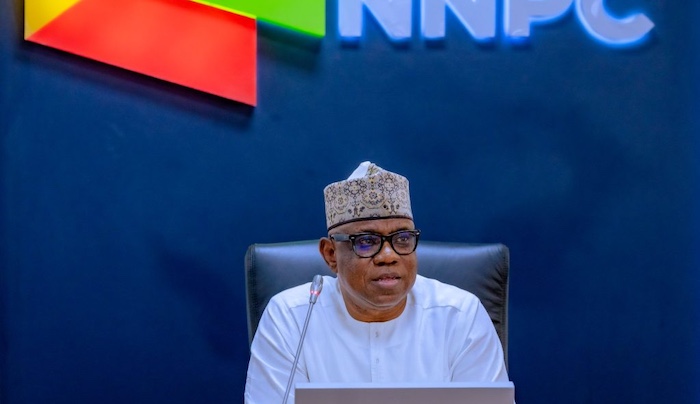
Bonga South-West is the first Final Investment Decision on a Nigerian deepwater Production Sharing Contract asset since 2008. For an industry that has watched deepwater projects remain stalled for years, that alone represents a significant break with the past. And it is difficult to discuss this emerging momentum without examining the role of NNPC Limited and the leadership of its Group Chief Executive Officer, Engr. Bashir Bayo Ojulari.
Read Also: Beyond Noise: Why Allegations Against Ojulari, NNPC Collapse Under PIA, Data
Ojulari inherited an institution whose public image had, over the years, become associated with bureaucracy, inefficiency, opacity and the inability to translate Nigeria’s enormous petroleum endowment into commensurate economic value. His challenge was therefore never simply about increasing crude production.
It was about changing the way the national oil company does business especially with the passage of Petroleum Industry Act, PIA.
The emerging philosophy under Ojulari is increasingly centred on commercial discipline, transparency, investment attraction, operational efficiency and the aggressive removal of obstacles standing between Nigeria’s petroleum resources and the capital required to develop them.
That is an important shift. The global energy business has changed dramatically. Capital is no longer automatically attracted to countries simply because they possess large reserves. Investors compare jurisdictions, assess fiscal terms, calculate risk and ask difficult questions about how quickly and predictably a project can move from approval to production.
Nigeria is therefore competing for capital, not merely selling crude. This is why the deep offshore incentive framework matters so much. The new fiscal regime is intended to provide the certainty investors need to commit long-term capital, accelerate Final Investment Decisions and bring commercially viable offshore developments into production. For NNPC, it creates a much clearer platform from which to engage international oil companies and turn stranded opportunities into bankable projects.
Ojulari’s response to the policy is revealing. He has described the reform as a landmark development capable of enhancing Nigeria’s competitiveness for deep offshore investment and supporting the country’s ambition of reaching three million barrels of oil production per day by 2030.
That ambition will not be achieved through declarations. It will require projects, capital, technology, infrastructure and, above all, investor confidence. Bonga South-West provides a glimpse of what that could look like. The immediate benefit is obvious: billions of dollars of investment flowing into the Nigerian economy and additional oil and gas production coming on stream. But the real economic impact could be considerably larger.
A project of this scale requires engineers, fabricators, marine operators, subsea specialists, logistics companies, financial institutions, project managers, environmental consultants and thousands of skilled workers. Its value chain stretches far beyond the offshore platform itself.
A sustained deepwater investment cycle could therefore breathe new life into Nigeria’s engineering and fabrication industry, expand marine logistics, strengthen technical services and create opportunities for indigenous companies to participate in increasingly sophisticated energy projects.
And greater confidence in Nigeria’s upstream sector can produce perhaps the most valuable commodity of all: repeat investment. That is where the transformation of NNPC becomes particularly important. A national oil company that merely administers petroleum assets is one thing. A commercially driven national energy company capable of structuring transactions, resolving complex contractual issues, attracting international capital and moving projects towards production is something entirely different.
Read Also: Silent Refineries: Ojulari waking the Sleeping Giants
The difference is increasingly visible. Even the changing conversation among Nigeria’s business leaders and energy stakeholders reflects this.
Billionaire businessman and energy investor Tony Elumelu has publicly praised the progress made in reducing crude oil losses, noting the dramatic improvement from the extraordinary levels of losses experienced previously. His comments are important because they underline the connection between security, production and investment confidence. When less crude is lost to theft and vandalism, more barrels reach the market, production becomes more predictable and the economics of investing in Nigeria improve.
That improvement cannot be separated from the broader reforms taking place across the petroleum sector and the drive by NNPC management to restore production efficiency.
The logic is straightforward. An investor will not commit billions of dollars to a project merely because Nigeria has oil beneath its waters. The investor wants to know that the operating environment is secure, contracts are respected, fiscal obligations are understood, infrastructure can support production and the institution sitting across the negotiating table understands the commercial realities of the industry. That is the confidence NNPC has built and sustaining under Ojulari.
Interestingly, even criticism of the company’s financial management has recently produced an unexpected demonstration of the importance of evidence and transparency.
The Association of Energy Policy and Development Consultants (AEPDC) had initially called for Ojulari’s removal over allegations concerning NNPC’s financial management and accountability. Following further investigations and consultations, however, the association withdrew its earlier position, acknowledging that its initial assessment had been based on incomplete information and subsequently apologising to Ojulari and NNPC management.
The episode is significant not because NNPC should be shielded from criticism; it should not. A company controlling assets of such enormous national importance must remain open to scrutiny. What matters is what happened when the allegations were tested against the facts. The position changed and that is precisely how serious institutional accountability should work.
It also reinforces one of the most important elements of Ojulari’s reform agenda: rebuilding confidence through greater transparency, clearer communication and evidence-based engagement.
The deepwater signing also sends a message to investors watching Nigeria from London, Houston, Paris, Dubai and other global energy centres: the country’s deepwater opportunities are not necessarily condemned to remain stranded assets.
There is movement. There is capital and there is a clearer fiscal framework. And there is now a national oil company increasingly determined to position itself as a commercial partner rather than simply a bureaucratic gatekeeper.
This is where Ojulari’s stewardship will ultimately be judged. The success of his reform agenda cannot be measured simply by how impressive its monthly figures appear. It must be measured by whether projects reach FID, whether capital flows into the country, whether production rises sustainably, whether costs are controlled, whether local businesses benefit and whether the Nigerian state receives greater value from its resources.
By that measure, the Bonga South-West agreement is an important marker. So too is the wider deep offshore investment framework. Together, they point towards an NNPC that is beginning to understand that its greatest value to Nigeria lies not merely in owning petroleum assets, but in unlocking them. And unlocking them requires a different mindset; one that sees every stranded field as potential capital, every contractual dispute as a commercial problem to be resolved, every investor as a potential long-term partner and every barrel produced as part of a wider national economic strategy.
That is the real significance of the Ojulari era. It needs an energy institution capable of creating value when the market is difficult, attracting capital when investors are cautious and turning opportunities buried beneath thousands of feet of water into tangible economic benefits for a country of more than 200 million people.
The early signs are encouraging. The real test, however, is still ahead. Bonga South-West must move from agreement to Final Investment Decision, from FID to development and from development to production. The US$50 billion deep offshore investment opportunity must translate from policy ambition into actual capital deployed, projects executed and barrels produced.
If that happens at scale, the story of NNPC under Bayo Ojulari will be much bigger than a story about increased oil production.
It will be the story of an institution rediscovering its commercial purpose.
From an organisation once criticised for consuming enormous resources without delivering commensurate value, NNPC is increasingly positioning itself as a magnet for capital, a catalyst for production and a financial backbone of Nigeria’s energy economy.
ONOGWU Muhammed, B.Tech (Chemical/Petroleum Tech.), LLB, BL, LLM (Energy and Oil Gas Law) in View, MIAD, ANIPR
About Post Author