Jennifer Alih Calls for Household-Focused Approach to National Development

Chief Jennifer Hembafan Alih advocates stronger households as the foundation for sustainable community and national development.
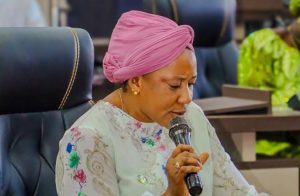
Community development advocate and Executive Director of JUWACI Nigeria, Chief Jennifer Hembafan Alih, has called for a shift towards household-focused development, arguing that sustainable national progress depends on stronger and more resilient families.
Alih made the call while delivering a keynote presentation titled, “The Paradigm Shift We Need: Build the Household. Build the Nation,” where she argued that challenges including poverty, education, healthcare and insecurity should not be addressed as isolated problems.
According to her, many of these challenges are interconnected and often converge at the household level, with issues such as school dropout, family instability, vulnerability to violence and poor access to healthcare reflecting deeper social and economic pressures on families.
She urged governments, development partners and communities to regard households not merely as beneficiaries of development interventions but as the primary units through which sustainable transformation can be achieved.
Alih said meaningful development would require investments capable of strengthening families and improving their ability to withstand social and economic shocks.
On women’s empowerment, she said support should extend beyond financial assistance to include choice, livelihood opportunities, healthcare, leadership, protection and stability.
She noted that a woman could remain vulnerable despite receiving financial support if the wider systems around her remained weak.
Alih also linked children’s educational outcomes to household conditions, observing that poor academic performance could be associated with unpaid school fees, food insecurity, illness, unstable home environments and struggling parents.
She maintained that addressing these underlying household challenges was essential to achieving sustainable improvements in education.
A central part of her presentation was the Hembafan Integrated Resilience Model (HIRM), which proposes a holistic development framework built around four pillars: Education Stability, Economic Livelihoods, Health and Wellbeing, and Social Stability.
The model seeks to strengthen household resilience by connecting interventions across sectors instead of addressing individual problems separately.
“Human lives are integrated. Our solutions must be integrated too,” Alih said.
She proposed three major shifts for development practitioners: moving from intervention to prevention by strengthening resilience before crises occur; treating communities as active participants in designing solutions rather than merely beneficiaries; and replacing isolated programmes with connected systems linking education, livelihoods, health and social stability.
While acknowledging the complexity of poverty, gender inequality, educational access and community peacebuilding, Alih said difficult development challenges required more integrated approaches.
She outlined a development chain in which stronger women contribute to stronger households, which in turn nurture stronger children, resilient communities and stronger nations.
“If we want to change the future, we must strengthen the place where the future begins, the household,” she said.
About Post Author