Indonesia Eyes Partnership with NAHCON on Hajj Fund Investment, Management
By Mahmud Babangida Beli
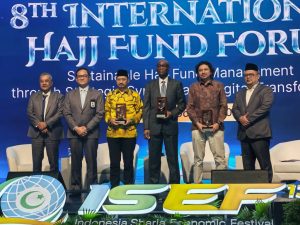
Nigeria’s growing stature in global Hajj administration has attracted fresh international interest, with Indonesia’s Hajj Financial Management Agency (BPKH) initiating discussions with the National Hajj Commission of Nigeria (NAHCON) on potential collaboration in Hajj fund investment and management. The move signals increasing confidence in Nigeria’s evolving Hajj governance framework and opens a new chapter in institutional cooperation between two of the world’s largest Muslim populations.
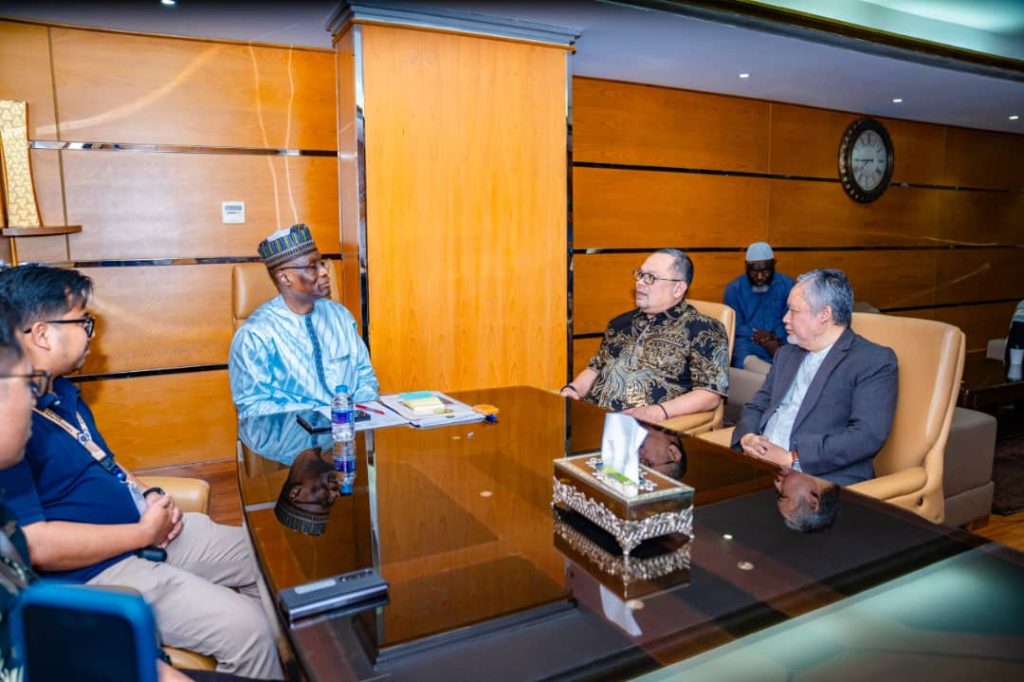
The Indonesian delegation, led by Prof. Arif Mufraini, visited NAHCON’s office in Makkah, Saudi Arabia, to explore strategic areas of partnership, particularly in the management, investment and sustainability of Hajj funds, as well as broader initiatives aimed at improving services and welfare for pilgrims.
Receiving the delegation, the Chairman and Chief Executive Officer of NAHCON, Ambassador Ismail Abba Yusuf, described the engagement as a timely opportunity for both countries to share experiences and develop innovative approaches to strengthening Hajj operations.
“It is an honour to receive you and we appreciate your decision to consult with us. In an operation of this magnitude, there is a lot to gain from consultation and sharing experiences,” he said.
The visit represents yet another indication of Nigeria’s growing influence in international Hajj administration, with NAHCON increasingly drawing attention from foreign institutions seeking collaborative solutions to the challenges of pilgrimage management, financing and service delivery.
Welcoming the delegation, Ambassador Yusuf reiterated NAHCON’s commitment to building a more sustainable and self-reliant operational model capable of enhancing service delivery, improving efficiency and reducing dependence on third-party providers.
He noted that Nigeria was particularly interested in learning from Indonesia’s globally recognised model of Hajj fund management and investment, which has enabled the Southeast Asian nation to establish a robust and sustainable financing structure for pilgrimage operations.
According to him, strategic investments in Hajj-related infrastructure, especially accommodation facilities in Saudi Arabia, could create long-term value for pilgrims while helping to reduce operational costs.
“If you invest well, perhaps by building hotels, we will patronize you. This could help us reduce the cost of accommodation for our pilgrims while also fostering a better understanding and stronger partnership between our institutions,” Yusuf stated.
The NAHCON Chairman further disclosed that the Commission is actively exploring investment opportunities within the Hajj ecosystem and hopes to commence strategic investments by 2027 as part of broader efforts to establish a financially sustainable model for Hajj administration.
He explained that the Commission plans to implement structured, long-term financial and operational reforms aimed at permanently eliminating the need for government financial bailouts and emergency interventions in future Hajj operations.
According to him, upon securing the necessary government approvals, NAHCON intends to mobilise and aggregate funds from some of its existing assets for investment in carefully selected Shariah-compliant equities and other halal ventures across multiple sectors of the economy.
The investments, he said, are expected to generate substantial and sustainable income streams that can be deployed to reduce the cost burden on pilgrims, cushion the impact of exchange rate fluctuations, offset operational subsidies and provide immediate financial buffers for unforeseen contingencies that may arise during Hajj exercises.
“This is part of our long-term vision to create a self-sustaining Hajj management framework that will not only improve operational efficiency but also deliver direct financial benefits to Nigerian pilgrims,” he added.
Speaking during the visit, Prof. Arif mufrani said the delegation’s objective is to explore practical cooperation in hajj fund management, investment and pilgrims service.
He explained that Indonesia operates one of the world’s largest Hajj savings schemes, allowing intending pilgrims to register from the age of 12 and begin contributing towards their future pilgrimage.
Prof. Arif disclosed that BPKH currently manages Hajj savings from approximately 5.6 million subscribers, each making an initial deposit of about $1,500.
According to him, the funds are professionally managed and invested in accordance with established regulations to support the sustainability of Hajj operations, improve service delivery and ensure long-term benefits for pilgrims.
He noted that Indonesia views collaboration with Nigeria as mutually beneficial, particularly in the areas of financial management, operational efficiency, pilgrim welfare and institutional development.
The meeting provided an opportunity for both organisations to exchange experiences, discuss common challenges and explore innovative approaches to improving Hajj administration in an increasingly dynamic global environment.
Observers say the engagement underscores Nigeria’s rising profile in the global Hajj community and reflects the confidence that other nations are beginning to place in the country’s evolving pilgrimage management system.
For both Nigeria and Indonesia, the discussions marked an important step towards deeper institutional cooperation, with a shared commitment to developing sustainable models that will enhance pilgrim welfare, strengthen operational efficiency and secure the future of Hajj administration in their respective countries.
About Post Author