Kogi East Stakeholders Revive 35-Year Political Network, Push Development, Power Rotation

Kogi East political stakeholders have unveiled KESSC to pursue development priorities and political equity in the region.
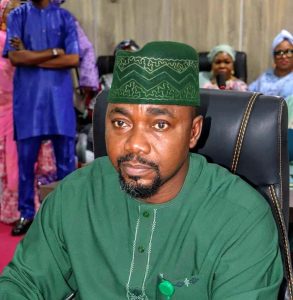
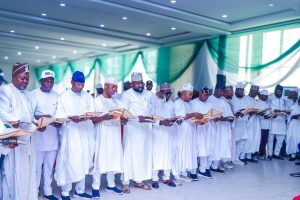
Key political leaders, elders and grassroots mobilisers in Kogi East have formed the Kogi East Strategic Stakeholders Coalition (KESSC), reviving a political network with roots dating back 35 years to pursue infrastructure development and political power-sharing in the senatorial district.
The coalition comprises veteran political actors, former APC local government chairmen elected in 2015 across the nine local government areas of Kogi East and political followers who said they have remained committed to the political philosophy of the late Prince Abubakar Audu since 1991.
In a statement announcing the coalition, the stakeholders said KESSC would focus on strategic engagement with government, improved coordination among political actors and the pursuit of measurable development outcomes across Kogi East.
The group also declared support for the re-election of President Bola Ahmed Tinubu and Kogi State Governor Ahmed Usman Ododo, linking the move to what it described as a renewed effort to negotiate the restoration of political power to the region.
The coalition said its political network had survived several changes in Nigeria’s political landscape, including the National Republican Convention (NRC), United Nigeria People’s Party (UNPP), All People’s Party (APP), All Nigeria Peoples Party (ANPP) and Action Congress of Nigeria (ACN), before eventually aligning with the ruling All Progressives Congress (APC).
A major focus of KESSC is the region’s infrastructure deficit, which the stakeholders said had persisted for about a decade.
Rather than reopening past political disagreements, the coalition said it would pursue negotiation, stakeholder coordination and documented commitments aimed at securing development interventions for Kogi East.
Among its immediate priorities is the accelerated establishment of a National Electric Transmission Substation in Kogi East to address persistent electricity shortages and support industrial and commercial activities.
The coalition also called for intervention on major intra-district roads, including the Ankpa–Abejukolo Road, Idah–Onyedega Road in Ibaji, Anyigba–Iyale–Abejukolo Road, Odenyi–Oguma–Sheria Road and Ejule–Alloma–Otukpa Junction Road.
It urged the Kogi State Government to coordinate advocacy for the Federal Government’s rehabilitation of key federal road corridors, including the Itobe–Anyigba–Ankpa–Otukpa Road, Idah–Odolu–Nsukka Road and Dekina–Shintaku Road.
KESSC further called for the rehabilitation and modernisation of public healthcare facilities, beginning with general hospitals at the headquarters of the nine local government areas.
The facilities listed are located in Idah, Onyedega, Ankpa, Dekina, Oguma, Abejukolo, Okpo, Ugwolawo and Ajaka.
Other priorities identified by the coalition include the expansion of sustainable rural water schemes and the deployment of stronger security measures along boundary communities, farming corridors and transit routes.
“These are capital-intensive priorities, but they are achievable where government commitment, stakeholder discipline, and public support are aligned,” the coalition said.
“KESSC will pursue these objectives through respectful engagement, clear documentation of priorities, and periodic feedback to the people of Kogi East.”
The group said it would consult community leaders, professional bodies, youth and women representatives, elected officials and government institutions while documenting agreed priorities, engagement outcomes and implementation milestones.
Beyond infrastructure, the coalition renewed calls for an inclusive and equitable power-rotation framework among Kogi State’s three senatorial districts.
KESSC said the advocacy would be pursued with respect for existing political blocs and leaders, with the objective of promoting political stability and broader participation.
Related News: Nine Kogi East APC LGA Chairmen Back 2027 Mobilisation, Power Rotation Framework
The stakeholders argued that the late Prince Abubakar Audu maintained political support across the state’s 21 local government areas and therefore did not operate as a regional political leader.
They said future power rotation should consequently be based on unity, demographic balance and shared confidence rather than rivalry or sectional interests.
The coalition called on political party members, youths, women leaders, professional groups, traditional institutions, community leaders and historical allies across Ankpa, Bassa, Dekina, Ibaji, Idah, Igalamela-Odolu, Ofu, Olamaboro and Omala to establish a coordinated platform focused on unity, development and the political relevance of Kogi East.
Participants listed in the coalition included Alhaji Karim Odawn of Ankpa; Hon. Alhassan Adakeke and Dr. Tim Diche of Bassa; Hon. Abdulahi Haruna (SAN), Hon. Dan Okolo, Dr. Johnson Musa and Alhaji Jibrin Yusuf of Dekina; and Mr Emmanuel Inielo of Ibaji.
Others were Hon. Elder Friday Sani of Igalamela; Malam Muhammad Gambo Ejule and Mrs Anaja Fatima of Ofu; and Alhaji Musa AbdulKarim of Omala.
The forum of pioneer APC local government chairmen also included Alhaji Abdullahi Kamilu Ahmed of Ankpa, Malam Umar Alhassan of Bassa, Hon. Peter Akubo of Dekina, Chief Isaac King-Gay Abah of Ibaji, Alhaji Abdullahi Abubakar A. of Idah, Malam Musa Yahaya of Igalamela, Malam Abubakar Yunusa of Ofu, Mr Dickson Agada of Olamaboro and Malam Danjuma Baba Muhammed of Omala.
About Post Author