Science Education: PAAU Professor Calls for Better Teacher Welfare, Funding
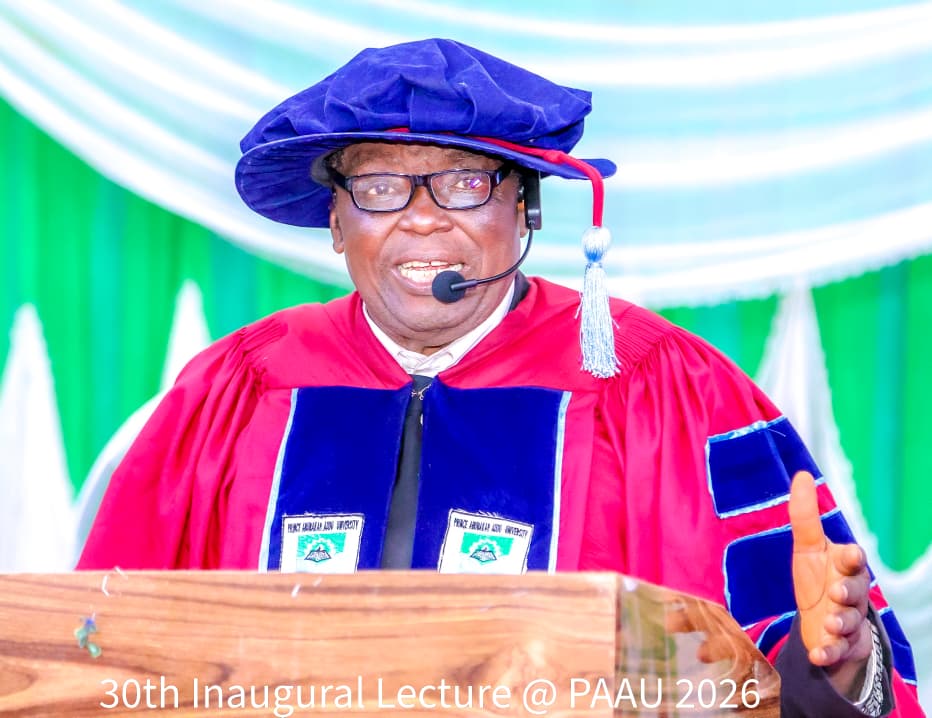
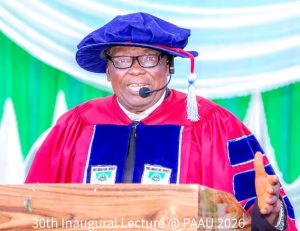
Professor Lawrence Achimugu delivering the 30th inaugural lecture of Prince Abubakar Audu University, Anyigba, on Tuesday, October 20, 2026.
Professor of Science Education at Prince Abubakar Audu University (PAAU), Anyigba, Lawrence Achimugu, has called on the Federal Government to improve teachers’ remuneration, increase education funding and strengthen the implementation of innovative teaching methods to address challenges confronting science education in Nigeria.
Achimugu made the call on Tuesday, October 20, 2026, while delivering the university’s 30th inaugural lecture, titled “Monkey De Work, Baboon De Chop: The Dark Shadow over Innovative Teaching Methods in Science Education.”
The Dean of the Faculty of Education said inadequate funding, poor infrastructure, overcrowded classrooms, insufficient teacher training and weak policy implementation were undermining efforts to improve science teaching and learning across the country.
He advocated the introduction of a new remuneration structure, which he described as a “Living Salary Scale”, to improve teachers’ welfare and encourage greater commitment to effective classroom instruction.
Explaining the theme of his lecture, the professor said the expression “Monkey De Work, Baboon De Chop” illustrated the imbalance between the responsibilities placed on teachers and the rewards or recognition they receive.
According to him, teachers are frequently expected to adopt demanding instructional innovations despite inadequate salaries, limited teaching resources and insufficient institutional support.
He warned that such conditions could weaken teachers’ motivation and discourage them from investing additional effort in modern teaching practices.
Read Also: Professor Jibrin Calls for Context-Sensitive Approach to Nigerian Literary Analysis
Achimugu maintained that when teachers perceived their contributions as undervalued, innovative teaching strategies risked remaining theoretical rather than becoming established classroom practices.
The professor explained that effective science education should extend beyond the memorisation of scientific facts to developing learners’ abilities to investigate problems, conduct experiments, think critically and apply scientific knowledge to practical situations.
The professor also identified overcrowded classrooms as a major obstacle, explaining that high teacher-student ratios made it difficult to provide individual attention, encourage active participation and deliver continuous feedback.
He stressed that teachers required regular professional development and practical exposure to contemporary instructional strategies to use innovative teaching methods effectively.
Referring to research findings presented during the lecture, Achimugu said many science teachers had limited awareness of several recommended instructional methods, while some approaches already familiar to them remained underutilised.
He attributed the situation partly to inadequate training, limited resources and insufficient institutional support.
The educationist, whose teaching career spans more than 42 years across primary, secondary and tertiary institutions, called for comprehensive reforms to improve teachers’ working conditions.
He recommended a welfare package covering annual leave allowance, furniture allowance, disturbance allowance for transferred teachers, vehicle refurbishment loans and housing loans.
Achimugu also advocated the reintroduction of science allowance to encourage science teachers to adopt practical and innovative instructional approaches.
He urged teachers and university lecturers to embrace simple, student-centred methods, including the enriched lecture method, rather than attempt complex innovations without adequate preparation or supporting facilities.
The professor further recommended the reintroduction and compulsory application of the Postgraduate Diploma in Education (PGDE) as a minimum teaching qualification for university lecturers to strengthen their pedagogical competence.
He maintained that improving science education required coordinated action involving better remuneration, adequate funding, functional laboratories, curriculum and examination reforms, continuous professional development and effective implementation of education policies.
Achimugu said the quality of science education had implications for Nigeria’s capacity to produce skilled professionals in medicine, engineering, agriculture, technology and other sectors essential to national development.
He emphasised that educational innovation would achieve meaningful results only when teachers were adequately prepared, motivated and supported by institutions committed to improving teaching and learning.
Speaking at the event, the Vice-Chancellor of Prince Abubakar Audu University, Professor Salisu Ogbo Usman, described the inaugural lecture as a reflection of the institution’s commitment to scholarship, research and the application of knowledge to societal development.
Usman said science education was central to innovation, technological advancement and national competitiveness, adding that the methods used in teaching science influenced students’ ability to investigate problems and develop practical solutions.
He acknowledged the difficulties confronting teachers and researchers who develop and implement innovative instructional approaches under conditions of limited resources and inadequate institutional support.
The Vice-Chancellor stressed that effective science teaching should involve inquiry, experimentation, laboratory practice and the appropriate application of technology rather than relying solely on the transmission of facts and memorisation of theories.
He noted that improving science education would strengthen the country’s capacity to address challenges in healthcare, agriculture, engineering, environmental sustainability and industrial development.
Usman congratulated Achimugu on delivering the university’s 30th inaugural lecture and commended his contributions to teaching, research, mentorship and educational leadership.
He also acknowledged the efforts of the Inaugural Lecture Committee, chaired by Professor S. S. Arogba, in organising the event.
The lecture was attended by members of the university community and invited guests.
About Post Author