When Virality Meets the Bar: Did the NBA Stretch “Beyond Limits” Into the Mud?
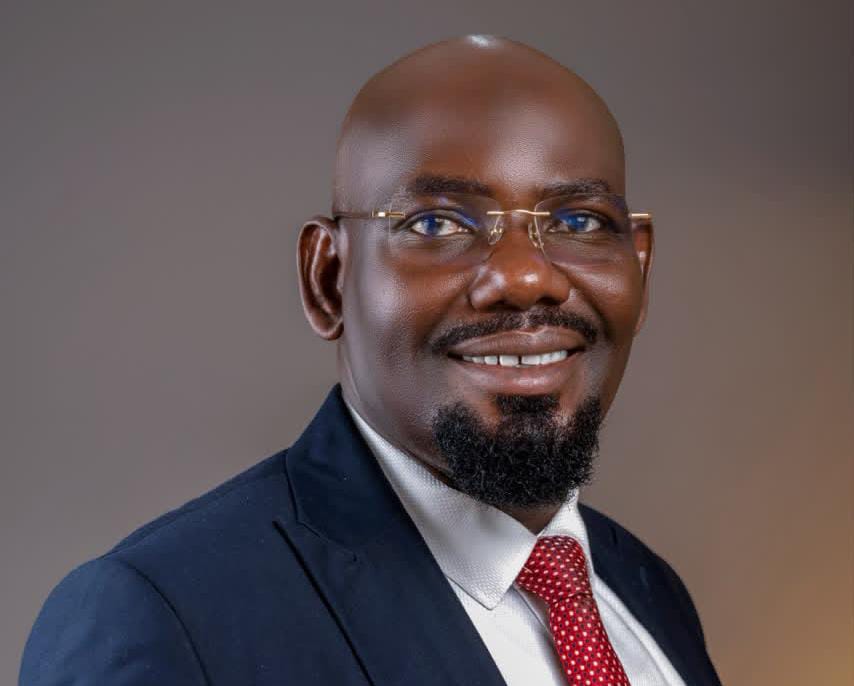
Let me begin by congratulating the immediate past President of the Nigerian Bar Association, Mazi Afam Osigwe, SAN, on what I consider a successful and impactful tenure. For two years, he provided purposeful leadership and remained visibly committed to the interests of members of the Bar. I wish him greater accomplishments in the years ahead.
I must equally commend the organisers of the 2026 Annual General Conference of the Nigerian Bar Association, themed “Beyond Limits”, for what was, by every reasonable assessment, a successful conference. But while applauding the organisers, I cannot, in good conscience, pretend that every decision surrounding the conference deserves applause.
On the contrary, the invitation of Martins Otse as a panelist, particularly on a subject as grave as insecurity, raises questions that the NBA ought to answer.
The Nigerian Bar Association has historically been much more than an association of lawyers gathering annually to exchange pleasantries, collect conference bags and take photographs. The Annual General Conference has, over the years, become the most significant intellectual gatherings in Nigeria. It is a meeting point for eminent scholars, Senior Advocates, professors, judges, legislators, diplomats, security professionals, captains of industry and other persons whose experience and expertise enrich national discourse.
The conference is followed not only by thousands of lawyers physically present at the venue, but by a much wider audience across Nigeria and beyond. Ideas expressed there can influence public policy, shape national conversations and, sometimes, find their way into the corridors of government.
That is precisely why the choice of speakers matters.
Lawyers are trained to listen. We listen to the learned and the unlearned, the professor and the apprentice, the eloquent and the incoherent because everybody deserves to be heard. The law, after all, does not confer wisdom by occupation, nor does it deprive a person of the right to speak merely because he lacks a professional qualification. But there is a difference between the constitutional freedom to speak and the institutional responsibility to provide a platform.
There is also a difference between being popular and being knowledgeable.
The Nigerian Bar Association is not a comedy club, nor should its intellectual platforms become popularity contests in which social-media virality is mistaken for expertise. If “Beyond Limits” means anything, it certainly should not mean going beyond the limits of professional judgement.
One therefore struggles to understand the basis upon which Martins Otse was invited to a prestigious NBA platform to speak on insecurity.
Was he invited as a victim of kidnapping? Was he presented as a security expert? Does he possess professional training in security management? Is he a researcher in national security? Has he commanded troops, managed intelligence operations, studied strategic security or participated in the formulation of security policy?
These are not intended as trick questions. They are legitimate questions about expertise.
There is nothing wrong with inviting a non-lawyer to an NBA conference. Indeed, lawyers should regularly engage professionals from other fields. The question is whether the person invited is sufficiently qualified by experience, knowledge or expertise to contribute meaningfully to the particular subject under discussion.
A social-media following is not a professional qualification. Viral videos are not academic credentials. The ability to command an online audience does not automatically translate into competence in military strategy, intelligence, counter-insurgency or national security.
Read Also: Constitutional Tenure Limits and the Principle Against Retroactive Laws in Nigeria
Unfortunately, our contemporary culture sometimes confuses visibility with authority. A person can become famous on Monday, trend on Tuesday and, by Wednesday, find himself introduced as an “expert” on matters he has never studied.
That is how intellectual standards begin to collapse. And if the NBA wishes to remain the foremost professional association of lawyers in Nigeria, it must be careful not to become another casualty of the social-media age, where the loudest voice is frequently mistaken for the most knowledgeable.
The issue of appearance also deserves some clarification. The legal profession has always attached considerable importance to dignity, decorum and proper appearance. This is not because lawyers believe that a gown confers supernatural powers upon its wearer. It is because professional institutions communicate values through standards.
That does not mean that a guest at an NBA conference must dress like counsel appearing before the Supreme Court. It does, however, mean that a conference of the Nigerian Bar Association ought reasonably to preserve a certain standard of dignity and decorum.
The legal profession cannot spend decades teaching young lawyers about professional etiquette and then suddenly discover that etiquette is an optional inconvenience whenever social-media popularity walks through the door. Admitting Martins Otse into the panel in such dresses was the very definition of institutional inconsistency.
But the more serious problem is not what Martins Otse wore. It is what he was given the platform to say. The Nigerian military, police and other security institutions are too important to the survival of the Nigerian state to be reduced to convenient punchlines at a professional conference. If a panelist alleges that the military or security agencies are corrupt or are enabling insecurity, those are grave allegations. They deserve evidence, context and, where necessary, investigation by the appropriate authorities.
Mazi Afam Osigwe, SAN, was therefore right to make the point that such allegations should be tested by the appropriate institutions rather than determined by the NBA when he was asked during the Annual General Meeting on Thursday.
But there is an institutional irony here. If the NBA provides the microphone, selects the panelist, places him before thousands of lawyers and allows him to make serious allegations against national institutions, it cannot completely wash its hands like Pontius Pilate immediately afterwards and say, “Those were his words, not ours.”
No. The NBA may not own the words, but it owns the platform. And platforms confer legitimacy. That is why professional bodies must exercise judgment over whom they invite to speak on matters of national importance. There is an old African proverb that says that whoever brings an ant-infested piece of firewood into his house should not complain when the lizards arrive for dinner.
The organisers may have intended to demonstrate openness and inclusivity. What they perhaps underestimated was the capacity of an unrestrained social-media personality to turn an intellectual platform into a personal stage.
The consequences were predictable.
This is where Martins Otse’s recent description of lawyers as a “bunch of clowns”, and his apparent dismissal of the legal profession as a “poor profession”, becomes particularly revealing. There is, of course, nothing inherently wrong with criticising lawyers. Lawyers are not a protected species. We can be criticised, challenged and even ridiculed where appropriate. But dismissing an entire profession while displaying an apparent misunderstanding of the very principles upon which that profession is built is less an intellectual argument than an exhibition of misplaced confidence.
One does not become an authority on law by standing close to a courtroom.
One does not acquire legal knowledge by speaking loudly about lawyers.
And certainly, going viral is not a substitute for going to law school.
The legal profession is noble not because lawyers are wealthy; many are not but because the profession is entrusted with the administration of justice, protection of rights, preservation of due process and maintenance of the rule of law.
The lawyer’s duty is not simply to make money. A lawyer is an officer of the court and owes duties to the court, the client and the administration of justice. That is why the profession regulates conduct, appearance, advertising, conflicts of interest and professional responsibility.
To describe the profession as “poor” because some lawyers are not swimming in money is to reveal a rather elementary misunderstanding of professional ethics.
The law is not a “trader-buyer” enterprise in which the highest bidder automatically receives justice.
Indeed, the most important legal work in Nigeria has been undertaken by lawyers who pursued constitutional rights, defended unpopular persons, challenged executive excesses and stood between citizens and the machinery of state.
That is the professional nobility.
It is therefore unnecessary for lawyers to be offended by every social-media provocation. The better response is to defend the institution by insisting upon its standards. And this brings us back to the NBA. The Association must decide what kind of professional institution it wants to be. If it wants to remain the intellectual conscience of the legal profession, it must guard the quality of its platforms. If it wants to invite non-lawyers, excellent. Invite economists, journalists, engineers, military officers, doctors, technology experts, entrepreneurs, diplomats and civil-society leaders. But invite them because they possess something substantial to contribute, not merely because they can generate traffic.
“Beyond Limits” should mean pushing the boundaries of legal knowledge, innovation and national discourse. It should not mean crossing the boundaries of professional judgement.
The lesson from the Martins Otse episode is therefore bigger than one individual and bigger than one conference. It is about the responsibility of institutions in an age where popularity can arrive long before knowledge, and where virality can masquerade as expertise.
The NBA should know better.
And lawyers must speak up.
ONOGWU Muhammed, Esq.
About Post Author