The Farmer Who Carried a Nation’s Hunger to Abuja

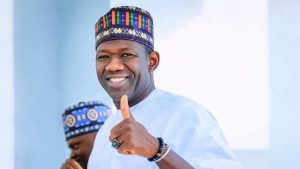
When Hon. Muhammad Magaji Gettado rose to speak at the APC Professionals Forum in Abuja this week, he was not merely addressing a gathering of politicians, technocrats and party faithful. He was carrying into the nation’s capital the voice of millions of Nigerians whose daily struggle begins not in conference halls but in fields, farmlands and rural communities scattered across the country.
In a nation where agriculture is often celebrated in speeches but neglected in budgets, the symbolism of the President of the All Farmers Association of Nigeria (AFAN) standing before policymakers to assess the impact of government reforms deserves closer attention.
Nigeria’s greatest challenge today is not oil. It is not politics. It is food.
A hungry nation is an anxious nation. A food-deficient nation is an insecure nation. And a country that cannot feed itself mortgages its sovereignty to external forces.
For years, Nigerian farmers laboured under a cruel burden. They battled insecurity, climate uncertainty, poor access to inputs, exploitative middlemen and inadequate financing. They tilled the soil with courage but harvested frustration. While policymakers debated statistics, farmers confronted realities.
That is why Gettado’s intervention at the APC Professionals Forum resonated beyond partisan politics.
His endorsement of ongoing agricultural reforms was not delivered from the comfort of theory. It came from a man whose political and professional journey has remained intertwined with the fortunes of Nigerian agriculture. Before emerging as AFAN’s national leader, Gettado served in several agricultural leadership roles, including as National Publicity Secretary of AFAN and Chairman of the Agriculture and Animal Husbandry Committee in the Gombe State House of Assembly. He later served as Commissioner for Agriculture and Animal Husbandry in Gombe State, placing him at the intersection of policy and practical farming realities.
Those who know him understand that his rise within the agricultural movement was neither accidental nor ceremonial. It was built through years of advocacy for farmers and engagement with the structural problems limiting agricultural productivity. His recent emergence as National President of AFAN has further strengthened his position as one of the country’s most visible farmer representatives.
Yet this story is bigger than one man.
The more consequential question is whether Nigeria is finally beginning to treat agriculture as a strategic national security asset rather than a seasonal intervention programme.
The signs are encouraging.
Across the country, government interventions are increasingly shifting from rhetoric to implementation. Farmers are reporting improved access to inputs. Mechanisation conversations have become more mainstream. Efforts to improve rural security have intensified. AFAN itself has repeatedly argued that security initiatives such as the deployment of forest guards could help restore confidence among farmers and return abandoned farmlands to productive use.
But celebration must never become complacency.
Agricultural transformation is not measured by announcements. It is measured by outcomes.
The true test of any reform agenda is simple: Are food prices falling? Are farmers earning more? Are rural communities becoming more prosperous? Are young Nigerians beginning to see farming as enterprise rather than punishment?
These are the metrics that matter.
What made Gettado’s remarks noteworthy was his insistence that Nigerian farmers are prepared to support reforms that modernise agriculture. That statement carries profound implications. It suggests a growing alignment between policymakers and producers — an alignment that has often been missing in Nigeria’s development story.
History teaches that no nation has achieved sustainable prosperity without first securing its food systems. America’s industrial rise was preceded by agricultural productivity. China’s economic miracle was built upon rural reforms. India’s transformation began when policymakers empowered farmers through the Green Revolution.
Nigeria’s path will be no different.
The country’s vast arable land, youthful population and expanding domestic market offer enormous opportunities. What has been lacking is consistency of purpose.
This is why the presence of figures like Muhammad Magaji Gettado matters. Not because they possess magical solutions, but because they serve as a bridge between government intentions and farmers’ realities. In a democracy, that bridge is indispensable.
The challenge before Nigeria is therefore clear.
The country must move beyond viewing agriculture as a poverty alleviation programme and begin treating it as a national economic project. Every hectare cultivated is a vote for food security. Every farmer empowered is a blow against inflation. Every successful harvest is a victory against poverty.
For too long, Nigeria has imported what it should produce and consumed what it should export.
The time has come to reverse that equation.
And if the conversations emerging from the APC Professionals Forum are matched by sustained action on the ground, history may yet remember this period as the moment when Nigeria finally recognised a simple truth: the future of the nation may well be decided not in oil wells, but in its farmlands.
Abdullahi Haroon writes from Abuja
About Post Author