Every Policy Has a Price: How Government Decisions Shape Economic Prosperity

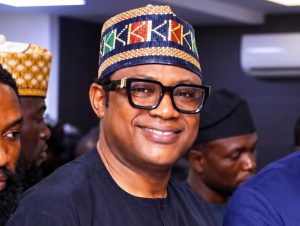
Dr Mahmoud Bala Alfa speaking on the WhotNow Podcast about political participation in Kogi East.
By Mahmoud Bala Alfa, Ph.D
Governments make decisions every day. Some dominate newspaper headlines and political conversations, while many others receive little public attention. But every important policy decision carries economic consequences. It affects the price of food, the confidence of investors, the cost of doing business, the ability of farmers to reach markets and the opportunities available to young people seeking meaningful employment. This is one of the central lessons of political economy that public policy is never just about government, why political economists ask different questions from politicians.
Political debates often focus on whether a policy is popular, whether it wins public approval or whether it gives one political party an advantage over another. A political economist asks what incentives does this policy create, and what economic outcomes is it likely to produce over time?
That question shifts our attention from today’s headlines to tomorrow’s prosperity. And it is for this reason that I propose what I call “The Policy Multiplier.”
The principle is straightforward. Every public policy changes incentives, and people respond to those incentives. Businesses decide whether to invest, farmers decide whether to expand production, young people decide whether to acquire new skills, and investors decide whether to commit capital. A well-designed public policy encourages confidence, enterprise and productivity, creating benefits that extend far beyond its immediate objective. A poorly designed policy does the opposite, spreading costs across the wider economy. The true value of any policy is therefore measured not only by what it intends to achieve today but also by the opportunities it creates tomorrow.
Consider transport infrastructure. A new road is far more than a construction project as it lowers transport costs for businesses, helps farmers move produce to markets more quickly, reduces post-harvest losses and encourages manufacturers to distribute goods more efficiently. Over time, these changes create jobs, expand economic activity and increase government revenue. What appears to be a simple road project gradually becomes an economic policy with effects that reach almost every sector of society. That is the Policy Multiplier at work.
Read Also: Why Some Nations Prosper While Others Only Change Governments
The opposite is equally true, as weak policies rarely create only one problem because. They increase uncertainty, discourage investment, raise production costs and reduce productivity across the economy. That is why poor policymaking is often far more expensive than it first appears.
Recent developments in Nigeria provide a useful example of why political economy requires us to look beyond immediate public reaction. The removal of fuel subsidy in 2023 remains one of the most significant economic reforms in recent Nigerian history. Before its removal, the subsidy was estimated to cost about US$10 billion each year, placing a heavy burden on public finances. The reform brought genuine short-term hardship through higher transport costs and increased living expenses. Those realities should never be ignored, but political economy also asks whether the fiscal space created by ending the subsidy is being converted into productive investments that strengthen the economy over time.
One immediate consequence of the reform was a substantial increase in revenues available to state governments through the Federation Account. That development created a new opportunity for sub-national governments, however, prosperity depends on whether those additional resources are invested in roads, irrigation, schools, healthcare, digital infrastructure and support for private enterprise. Money does not transform an economy by sitting in government accounts. It transforms an economy only when it becomes a productive investment. This is where The Policy Multiplier becomes the real test of governance.
The same analytical approach applies to exchange-rate reform. For many years, Nigeria operated multiple exchange-rate windows that created distortions within the economy and encouraged arbitrage. The move towards a more unified exchange-rate system sought to improve transparency, strengthen investor confidence and create a more predictable environment for businesses. The transition undoubtedly imposed difficult adjustments on households and firms, but structural reforms should be judged not by whether they strengthen productivity, encourage investment and improve economic efficiency over time. In its recent assessments of the Nigerian economy, the International Monetary Fund has identified exchange-rate reform, fuel subsidy removal, fiscal consolidation and domestic revenue reforms as important steps towards restoring macroeconomic stability and improving the country’s long-term growth prospects.
According to the International Monetary Fund, Nigeria’s economy grew by about 3.4 per cent in 2024. The Fund projects growth of around 4.0 per cent in 2025 and about 4.1 per cent in 2026, reflecting expectations that recent reforms, stronger macroeconomic management and improvements in key sectors will gradually support higher economic activity.
This improving outlook is also influencing how international investors view Nigeria. As macroeconomic stability gradually strengthens, confidence in the country’s long-term prospects is expected to improve. The International Monetary Fund has projected that Nigeria will be among the world’s leading contributors to global economic growth over the coming years, largely because of its economic potential, demographic strength and reform trajectory. That projection is not a declaration of success. Rather, it is a reminder that sound public policy can reshape how a nation is perceived by investors and by the wider international community.
History offers useful lessons beyond Nigeria. Vietnam did not become one of Asia’s fastest-growing manufacturing economies because of a single policy or a single leader. It achieved sustained growth through decades of reforms that encouraged production, exports and private investment. Its experience reminds us that prosperity is rarely created overnight. It is built gradually through consistent policies, credible institutions and steady implementation.
Nigeria possesses every ingredient required for economic success. What we need is not simply more government activity but better public policies that reward enterprise, strengthen institutions, encourage innovation and expand opportunities for productive investment.
Political economy teaches us that there is no such thing as a cost-free policy, every public decision creates trade-offs, and every reform produces both opportunities and challenges. The responsibility of leadership is not to avoid difficult decisions but to ensure that those decisions strengthen the productive capacity of the economy and leave future generations better off than the present one. And surely, the incumbent administration of President Bola Ahmed Tinubu is doing an amazing job.
Every policy has a price.
The real measure of leadership is whether that price becomes an investment in shared prosperity or a burden that future generations are forced to bear. Nations rise when public policy consistently rewards production, strengthens institutions and expands opportunity. That is how economies grow. That is how prosperity is sustained. And that is how governments leave a lasting legacy.
Nigeria is on the path to prosperity.
About Post Author