PAAU Inaugural Lecture: Prof. Egwemi Calls for Polycrisis-Responsive Performance Curriculum
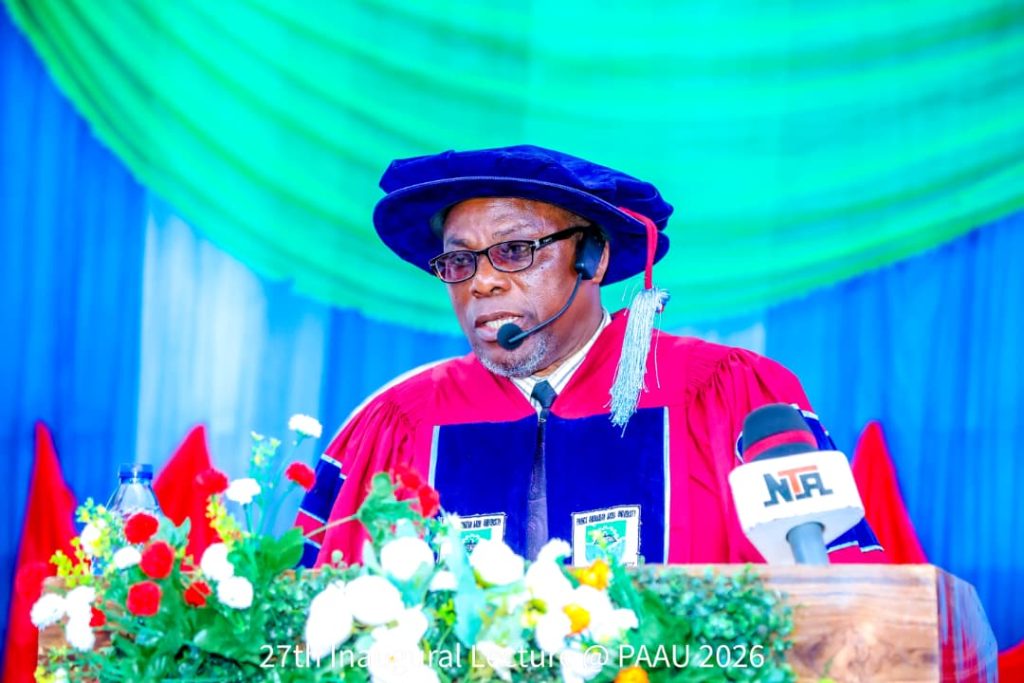
Professor Oja Paul Egwemi has called for a fundamental rethink of performance education in Nigerian universities, proposing a Polycrisis-Responsive Curricular Theatre for Development (PRCTfD) model to better connect academic training with community needs.
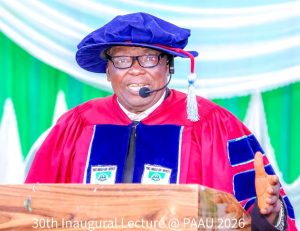
Egwemi made the proposal on Tuesday, September 8, 2026, while delivering the 27th Inaugural Lecture of Prince Abubakar Audu University (PAAU), Anyigba, titled, “The Gowns We Wear, The Towns We Go: Rethinking Performance Curricula for Development in Nigeria Amid a Polycrisis,” at the University Auditorium.
The Professor of Dramatic Literature and Film Studies said the proposal was necessary because much of what is taught in drama and film programmes has not sufficiently translated into practical responses to the challenges confronting local communities.
He described Nigeria’s current situation as a “polycrisis”, characterised by interconnected challenges involving governance, economic instability, insecurity, environmental stress and social fragmentation.
According to him, Theatre for Development (TfD) should not remain confined to the classroom or university environment but should serve as a bridge between academic knowledge and lived community realities.
Egwemi said embedding TfD in university curricula would create a two-way learning process in which universities and communities become co-creators of knowledge.
He cited a number of previous curricular TfD projects to demonstrate both the potential and limitations of community-based performance.
Speaking on the 2019 Ayah project, he said students and residents used participatory needs assessments to address challenges affecting the local school system, healthcare, water and market structures.
He noted that while community committees succeeded in keeping the local school functional, the water and market initiatives stalled because of weak maintenance and inadequate follow-up.
Egwemi said the experience demonstrated that long-term community ownership was critical to the sustainability of development interventions.
On the 2021 Odolu TfD project, he said participation was strong during problem identification but declined during script development and rehearsals due to changing storylines, domestic responsibilities and language barriers.
He therefore stressed that consultation should not be mistaken for genuine participation, arguing that community members should remain active collaborators from the research stage through script development, performance, post-performance dialogue and follow-up.
He also discussed the 2022 Ofabo Project in Ofu Local Government Area, where participatory research identified neglect, limited public awareness and excessive dependence on government intervention as factors contributing to the community’s severe water crisis.
Read Also: Prof Saliu Proposes NADTTC, Outgrower Schemes to Boost Food Security
The professor highlighted the interdisciplinary potential of Theatre for Development, noting that partnerships with fields such as Microbiology and external non-governmental organisations could provide scientific and technical support while improving the longevity of projects.
He further referenced the 2024/2025 TfD programme in Ajagwumu, Dekina Local Government Area, as another example of the evolving application of community-based performance to local challenges.
Presenting his proposed PRCTfD model, Egwemi identified five core pillars: Participatory Knowledge Production; Interdisciplinary Collaboration; Digital and Community Communication Integration; Sustainability Through Community Ownership; and Impact Evaluation with Reflective Learning.
He urged universities to move away from short-term, semester-bound projects and adopt continuous, context-sensitive community engagement capable of producing reflective and socially conscious practitioners.
Egwemi said the relationship between the “gown”, representing academic authority, and the “town”, representing lived experience, should be continuous, with academic institutions listening to and learning from community knowledge.
He also called on universities and state and national institutions to provide sustained administrative coordination, funding and structural support for the integration of Theatre for Development into sectors including health, education, the environment and governance.
The don recommended that evaluation of performance studies should go beyond conventional academic measurements to include relational outcomes, the depth of the process and long-term community impact.
He also advocated greater use of indigenous media, folk traditions and local languages in performance education, rather than relying predominantly on externally imposed or purely technical performance structures.
According to him, performance education should not be reduced to entertainment or economic utility, but should contribute to national development by promoting civic consciousness, dialogue and collective action.
Earlier, the Chairman of the Inaugural Lecture Committee, Professor S.S. Arogba, congratulated Egwemi on attaining the academic milestone and commended his contributions to scholarship in Dramatic Literature and Film Studies.
Representing the Vice-Chancellor of PAAU, Professor Salisu Ogbo Usman, the Deputy Vice-Chancellor (Administration), Professor Rufai Sani Abdullahi, described the lecture as a significant institutional milestone, coming barely one week after the university’s 26th inaugural lecture.
Abdullahi said the lecture was the 10th inaugural lecture delivered under the current administration since it assumed office on February 11, 2026, describing the pace as an indication of a growing research culture at the university.
Read Also: PAAU Professor Calls for Countermarketing to Tackle Insecurity, Poverty
He congratulated Egwemi on his scholarly accomplishments and commended him for addressing the gap between academic training and community needs.
According to the DVC, bridging the distance between the “gowns we wear” and the “towns we go” is a national development imperative, as performance education must ultimately serve humanity beyond the university environment.
He added that the lecture provided useful perspectives for educators, policymakers and creative practitioners seeking evidence-based responses to Nigeria’s complex societal challenges.
Abdullahi reaffirmed the university’s commitment to rigorous scholarship, teaching excellence and purposeful knowledge dissemination.
The event ended with the presentation of an inaugural lecture certificate, plaque and medal to Egwemi.
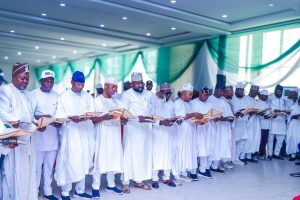
The lecture was attended by members of the University Governing Council, Management and Senate, academic and non-teaching staff, students, scholars from other institutions, religious and traditional leaders, and other guests from within and outside the university community.
About Post Author