NCC Trains 100 Persons With Disabilities on Digital Skills
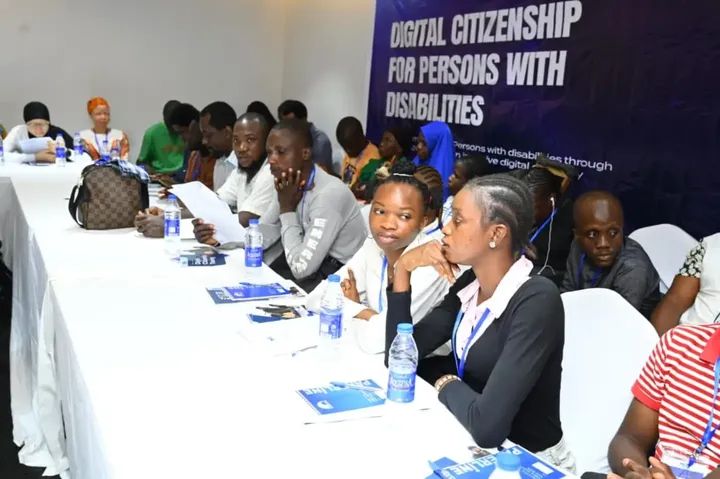
Participants during the NCC digital skills training for persons with disabilities in Lagos.
The Nigerian Communications Commission (NCC) has trained 100 persons with disabilities in smartphone use, digital learning, online safety and income-generating opportunities in Lagos.
The two-day training was organised by the NCC in collaboration with the Lagos State Office for Disability Affairs (LASODA) and Christian Blind Mission International as part of efforts to promote inclusive digital participation.
The programme focused on practical digital skills, including the use of accessibility features on smartphones, navigating online learning opportunities and understanding responsible and safe participation in the digital environment.
Read Also: Nigeria Adopts 112 Emergency Number as NCC Launches Nationwide Implementation
For some participants, the training also helped overcome apprehension about using digital technology.
One participant said her educational background had previously made her feel intimidated whenever digital opportunities were discussed.
“When I heard anything about digital, due to the level of my education, I used to be scared,” she said.
She added that the practical sessions helped her gain confidence and understand the lessons more easily.
“Once Mrs Binta started yesterday, I just blew. I just focused. And everything she was saying was just sticking to my brain,” she said.
Smartphone as a learning tool
One of the facilitators, Binta Gali Agbonika, encouraged participants to make greater use of the accessibility features already available on their mobile devices.
Agbonika said smartphones could serve purposes beyond telephone calls and social media, particularly for people who rely on assistive features to access digital content.
“This phone can change your life. You can study with your phone,” she said.
According to her, participants could use their smartphones to read, search for information, take online courses and acquire skills that could expand their educational and economic opportunities.
“There are so many things that we’re supposed to be using our phone to do that we don’t even do up to 25% with it,” Agbonika said.
The training consequently placed emphasis on practical application of digital devices and accessibility settings, rather than limiting digital citizenship to basic knowledge of operating smartphones and computers.
The programme also exposed participants to ways of using digital platforms to pursue learning and income-generating opportunities.
Another participant said she had been searching for a digital marketing course and that the training had improved her ability to navigate online learning platforms.
“I’ve been trying to get a course on digital marketing. So today I can find my way around,” she said.
The training highlighted the importance of combining access to digital devices with practical skills, accessible platforms, digital confidence and knowledge of online safety.
Speaking on behalf of the NCC Executive Vice-Chairman and Chief Executive Officer, Dr Aminu Maida, the commission’s Director of Digital Economy, Helen Obi, reaffirmed the NCC’s commitment to inclusive digital transformation.
Obi said disability and accessibility barriers should not prevent people from participating in the digital environment.
“At the NCC, we believe that digital transformation must be inclusive, accessible, and people-centred,” she said.
She explained that digital citizenship extended beyond knowing how to operate smartphones and computers.
“Digital citizenship goes beyond operating a smartphone or computer. It encompasses the knowledge, skills, and responsible behaviours required to participate safely and meaningfully online,” Obi said.
The training therefore combined digital literacy with practical guidance on accessibility, online safety, online learning and economic opportunities.
The programme forms part of broader efforts to reduce barriers that can limit the participation of persons with disabilities in Nigeria’s increasingly digital environment.
Such barriers may include inaccessible digital content, limited awareness of built-in accessibility features and inadequate opportunities for practical digital training.
For participants who previously lacked confidence in using digital technology, the immediate outcome of the training was increased familiarity with digital tools and online resources.
The longer-term impact will depend on how effectively the participants apply the skills acquired to education, access to information, digital services and livelihood opportunities.
About Post Author